
Lithium battery recycling faces inefficiencies that waste valuable materials and pose environmental hazards. If poorly managed, toxic leakage and resource loss escalate costs and risks. A structured, efficient production line solves this.
Lithium battery recycling production lines systematically dismantle, sort, and process end‑of‑life batteries to recover valuable metals like lithium, cobalt, nickel, and copper. By integrating mechanical, chemical, and thermal processes, they reduce environmental impact, improve material recovery rates, and sustain economic viability for battery producers and recyclers.
This overview explains the step‑by‑step operation of an industrial recycling line in detail.
Inhaltsübersicht
Overview of a Lithium Battery Recycling Production Line
A lithium battery recycling production line is a complex, highly engineered workflow designed to safely, efficiently, and economically recover valuable materials from spent lithium‑ion batteries. These systems combine mechanical separation, thermal treatment, and chemical processing to neutralize hazardous components, segregate materials, and extract critical metals for reuse in new battery production or other industrial applications. The entire operation prioritizes worker safety, environmental compliance, and maximizing resource recovery.
1. Battery Collection, Inspection, and Pre‑Sorting
The first stage is the collection and inspection of spent lithium‑ion batteries. Batteries arrive from collection depots, manufacturers, or take‑back programs. Trained technicians identify battery chemistries and physical conditions to ensure proper sorting. This avoids processing errors and enhances downstream efficiency by isolating batteries requiring different treatment methods.
2. Discharge and Safe Handling
Before processing, batteries must be safely discharged to eliminate residual energy. This prevents short circuits or fires. Specialized units drain the remaining charge, and the batteries are then logged and tagged to ensure traceability throughout the line.
3. Mechanical Dismantling and Crushing
Once safely discharged, batteries are mechanically dismantled and shredded into smaller fragments. This stage liberates key materials such as metals, separators, and plastics. Magnetic, eddy current, and air separation systems isolate valuable fractions like steel, aluminum, and copper from the rest of the material stream.
4. Thermal Treatment (Pyrometallurgy)
In this stage, shredded materials undergo thermal treatment in high‑temperature furnaces. This process removes organic binders, decomposes plastics, and evaporates harmful solvents. The result is a stabilized feedstock, ready for efficient chemical extraction in later stages. Off‑gas systems are used to safely capture and treat emissions.
5. Hydrometallurgical Processing
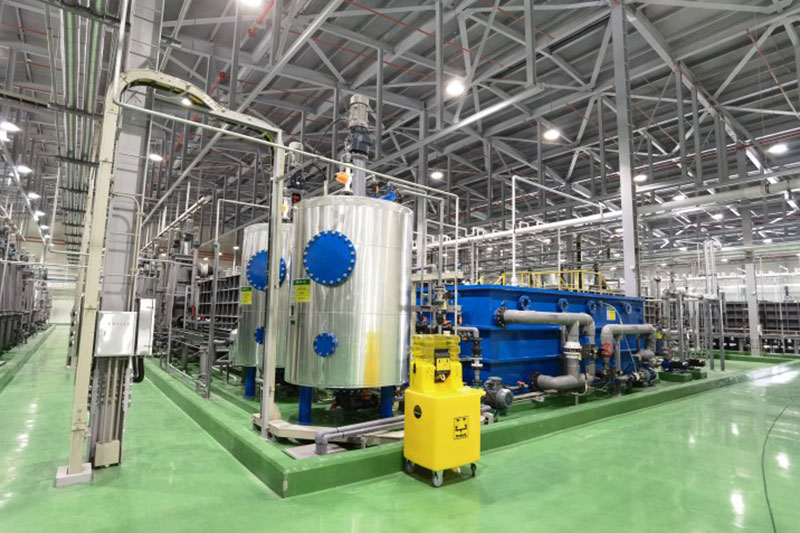
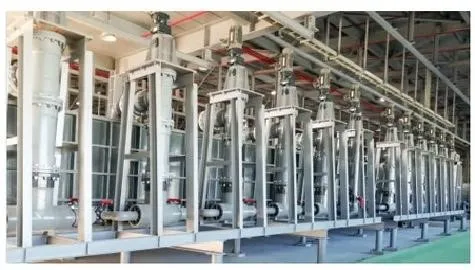
Chemical leaching is the core process for recovering lithium, cobalt, nickel, and other metals. The crushed material is dissolved in acid solutions inside controlled leaching tanks. Solvent extraction, ion exchange, and precipitation technologies then isolate individual metals from the leachate. These compounds are refined to meet battery‑grade purity standards.
6. Water and Waste Treatment
Effluent and wastewater are generated during chemical processing, requiring treatment before discharge. Advanced systems neutralize contaminants and recover usable water, while solid waste is stabilized and disposed of according to regulations.
7. Quality Control and Material Output
Recovered metals undergo stringent quality testing using analytical tools such as ICP‑OES and XRF. Only compounds that meet customer purity standards are released. Finished products like lithium carbonate, cobalt sulfate, and nickel compounds are packed and sold to battery manufacturers or chemical processors.
8. Continuous Monitoring and Automation
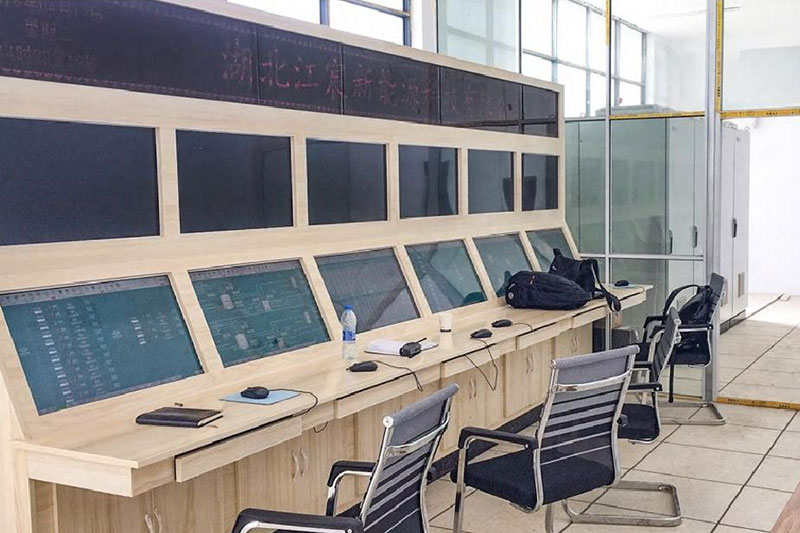
Modern production lines incorporate real‑time monitoring, automation, and data collection to optimize performance. These systems detect anomalies, reduce manual handling, and ensure safety compliance. AI‑driven systems assist in predictive maintenance and efficiency improvements.
Environmental and Economic Benefits
Recycling reduces reliance on raw material extraction and minimizes environmental risks. By feeding recovered metals back into battery production, recycling lines help stabilize supply chains and reduce emissions. They also support ESG goals and contribute to sustainable industrial ecosystems.
Challenges and Future Developments
Challenges include diverse battery types, fluctuating feedstock quality, and the need for cost‑effective scalability. Future solutions lie in direct recycling technologies, AI‑powered material recognition, and modular systems that enable local, decentralized processing.
Efficient lithium battery recycling production lines enable safe, cost‑effective recovery of critical metals while minimizing environmental impact and supporting sustainable energy ecosystems.
 Deutsch
  English
  Français
  Português
  Español
  Italiano