
Uncontrolled reactions can waste resources, cause unstable operations, and pose safety hazards—reaction tanks provide the controlled environment needed to ensure efficiency, reliability, and industrial safety.
A reaction tank is an engineered vessel that enables, regulates, and optimizes chemical or biological reactions under precise conditions. By controlling mixing, temperature, pH, and residence time, it ensures consistent quality, safety, and efficiency.
Keep reading to understand how reaction tanks work, their functions, TYIC NEW ENERGY’s unique manufacturing advantages, and why they are essential across industries.
Inhaltsübersicht
How Reaction Tank Works
A reaction tank is essentially the heart of many industrial processes. It allows reactants—whether chemical compounds, biological cultures, or waste materials—to interact under engineered conditions. The design ensures the desired outcome while minimizing risks.
-
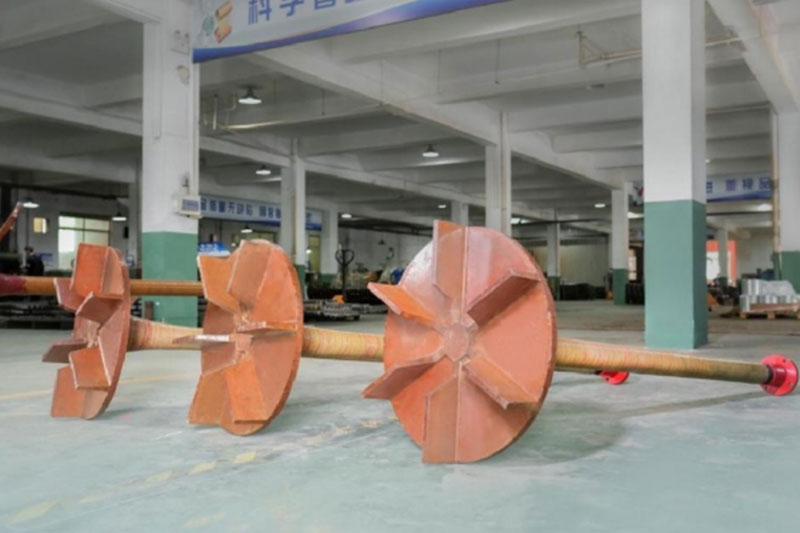
Mixing and Agitation: Reactants must be evenly dispersed for uniform reaction. Agitators prevent sedimentation, hotspots, and incomplete conversions, significantly improving reaction yield.
-
Temperature Control: Many reactions are highly sensitive to temperature. Integrated heating jackets, cooling coils, or external exchangers regulate conditions. Exothermic reactions are cooled to prevent runaway hazards, while endothermic ones receive sustained heat input.
-
pH and Pressure Regulation: Precision sensors constantly monitor process parameters, while automated feedback systems adjust dosing, pressure relief, or neutralization, ensuring safe and optimized conditions.
-
Residence Time: The shape and volume of the tank ensure reactants remain inside long enough for full conversion but not too long to cause degradation.
For example, in Abwasserklärung, reaction tanks neutralize acidic or alkaline effluents before discharge. In Batterierecycling, they dissolve spent electrodes in controlled conditions to recover lithium and cobalt efficiently. Without such control, processes would become dangerous, wasteful, and unsustainable.
Functions of Reaction Tank
Reaction tanks fulfill multiple critical roles in industrial processes, going beyond simple mixing vessels:
-
Homogenization – Ensures reactants mix thoroughly to avoid localized concentrations that lead to uneven product quality.
-
Catalysis Support – Optimizes the environment for catalysts, often improving efficiency by 20–30%.
-
Thermal Regulation – Maintains stability in sensitive reactions. For instance, pharmaceutical production often requires temperature to stay within ±1℃.
-
Safety and Reliability – Features like pressure relief valves, double-wall construction, and fail-safe shutdown systems prevent accidents.
-
Byproduct Neutralization – Some tanks are designed to neutralize or capture harmful byproducts, reducing environmental impact.
-
Integration der Automatisierung – When paired with PLCs and SCADA systems, reaction tanks become part of smart factories, offering real-time control and data-driven optimization.
In high-tech manufacturing, such as semiconductors or electric vehicle batteries, precision reaction control ensures consistent quality. Even slight deviations can cause multi-million-dollar losses, highlighting why advanced reaction tanks are indispensable.
TYIC NEW ENERGY’s Advantages on Manufacturing Reaction Tank
TYISCHE NEUE ENERGIE, a leader in environmental and energy equipment manufacturing, has established itself as a trusted supplier of advanced reaction tanks. The company integrates engineering expertise, advanced materials, and automation to deliver reliable solutions across industries.
-
Material Innovation: TYIC NEW ENERGY uses PPH, CPVC, and HDPE materials, which offer superior resistance to acids, alkalis, and solvents compared to conventional steel. This ensures a longer operational lifespan, even in aggressive chemical environments.
-
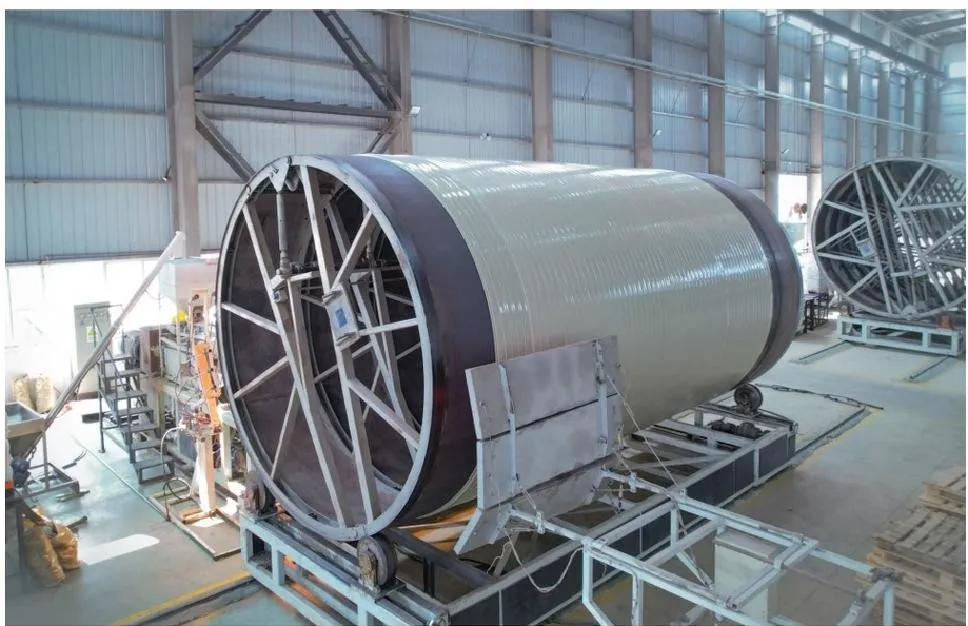
Seamless Spiral-Wound Technology: By adopting European extrusion-winding methods, tanks are built without horizontal weld seams, eliminating leakage risks and boosting structural strength by over 30%.
-
Customized Engineering: Every industry has unique demands. TYIC NEW ENERGY designs reaction tanks tailored to specific needs—whether large-scale metal extraction tanks or compact wastewater treatment reactors.
-
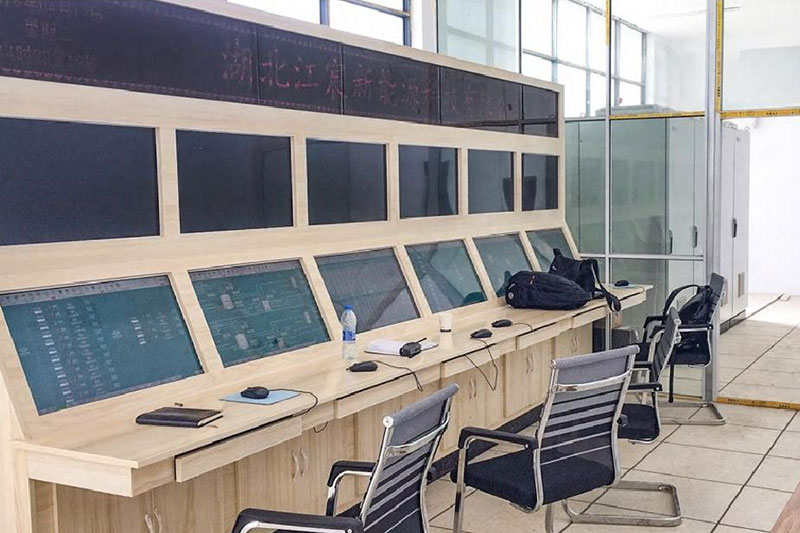
Smart Automation: Integrated with advanced PLC and sensor networks, the tanks provide real-time monitoring of flow rates, pH, temperature, and chemical dosing, enabling automated adjustments for consistent performance.
-
Global Experience: TYIC NEW ENERGY has delivered projects to clients such as EcoPro (Südkorea), Ganfeng Lithiumund Wanhua Chemie, demonstrating its international reliability.
Case Study: Lithium Battery Recycling in South Korea
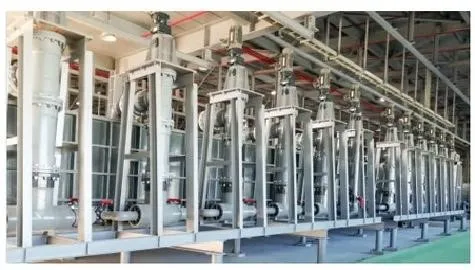
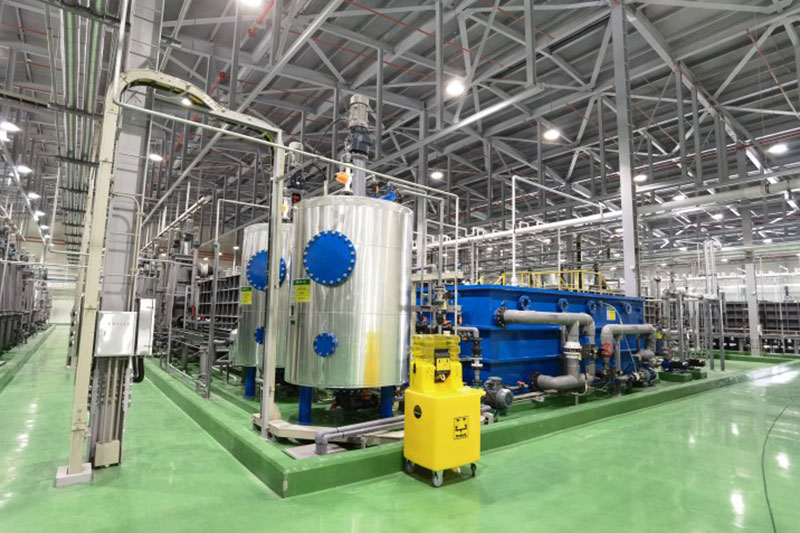
For EcoPro, TYIC NEW ENERGY supplied a series of large-scale automated reaction tanks. These tanks enabled precise leaching of spent lithium-ion batteries, increasing recovery efficiency by 15% while cutting chemical consumption by 12%. The system also ensured compliance with stringent environmental regulations.
Case Study: Chemical Wastewater Treatment in China
A chemical plant in Zhejiang adopted TYIC NEW ENERGY’s reaction tanks with automated dosing systems. The tanks neutralized acidic effluents, reducing pH fluctuations by 90% and lowering treatment costs significantly.
These examples highlight TYIC NEW ENERGY’s ability to not only supply tanks but also deliver integrated solutions that maximize sustainability and efficiency.
Applications of Reaction Tank
Reaction tanks are applied in a broad range of industries, each requiring unique design considerations:
-
Pharmazeutika: Reaction tanks are used in API synthesis, fermentation, and drug formulation, requiring strict temperature and sterility controls.
-
Chemikalien: From polymerization to neutralization, they handle large-scale reactions critical to producing resins, plastics, and industrial intermediates.
-
Metallurgie: Essential in leaching and solvent extraction, reaction tanks recover precious and non-ferrous metals such as nickel, cobalt, and rare earth elements.
-
Environmental Protection: In wastewater treatment, reaction tanks neutralize effluents, facilitate flocculation, and disinfect harmful microorganisms, ensuring compliance with environmental standards.
-
Battery Recycling: Tanks enable safe and efficient dissolution of electrode materials, critical for recovering lithium, manganese, and cobalt.
-
Food and Beverage: Used in brewing, fermentation, and food additive preparation, where hygiene and controlled biochemical processes are vital.
Each industry applies reaction tanks differently, but the central goals remain the same: efficiency, safety, and sustainability.
Zusammenfassung
Reaction tanks safeguard industrial processes with precision, safety, and efficiency—TYIC NEW ENERGY sets the benchmark in advanced reaction tank solutions.
 Deutsch
  English
  Français
  Português
  Español
  Italiano