
Modern industries face a persistent problem: how to achieve consistent product quality during mixing. Poorly blended materials lead to defects, inefficiencies, and customer dissatisfaction. A proper mixing tank solves this by ensuring uniform blending, stable performance, and reliable scalability, safeguarding both production and reputation.
A mixing tank is an industrial vessel designed to combine liquids, powders, or semi-solids into a homogeneous mixture. Equipped with agitators or impellers, these tanks are widely used in food, pharmaceutical, chemical, cosmetic, and water-treatment industries to ensure consistency, efficiency, and compliance with safety standards.
Discover the types, uses, and benefits of mixing tanks in detail below.
Table des matières
Definition of a Mixing Tank
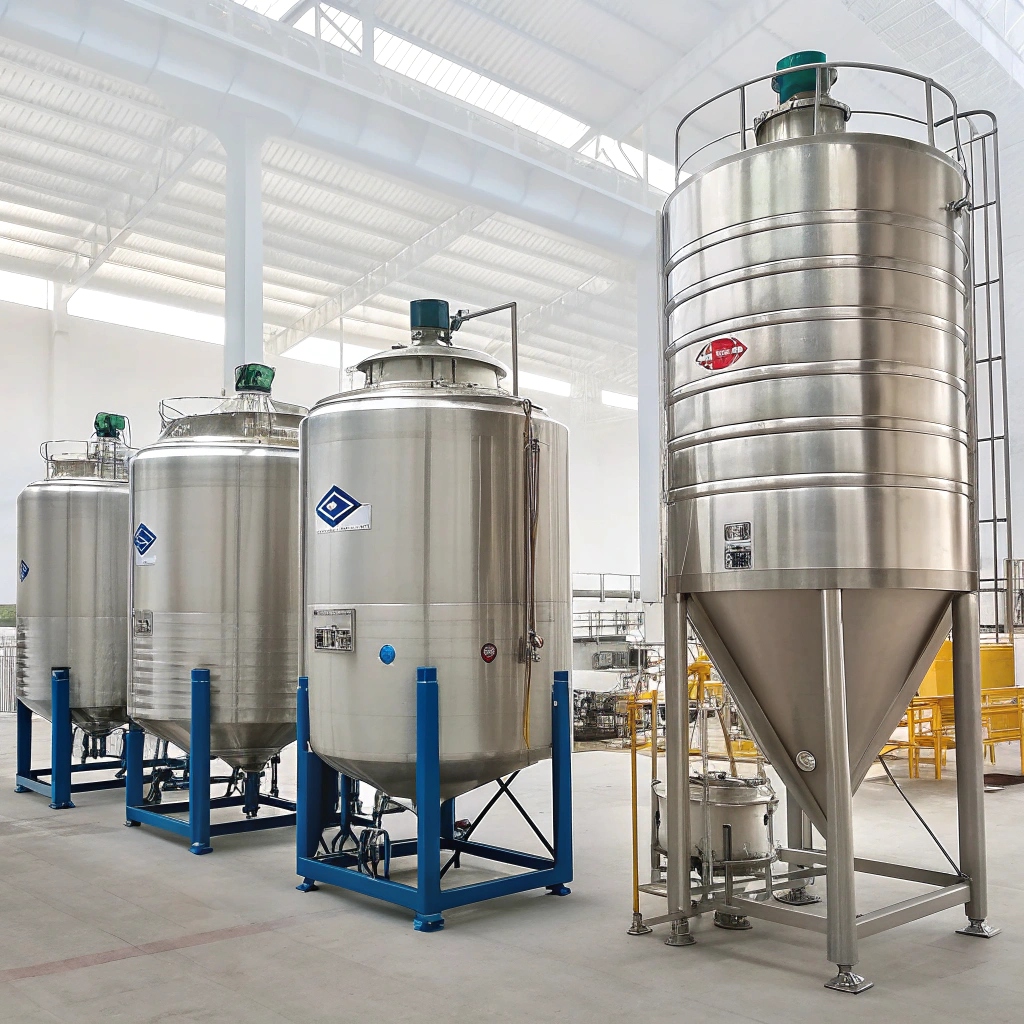
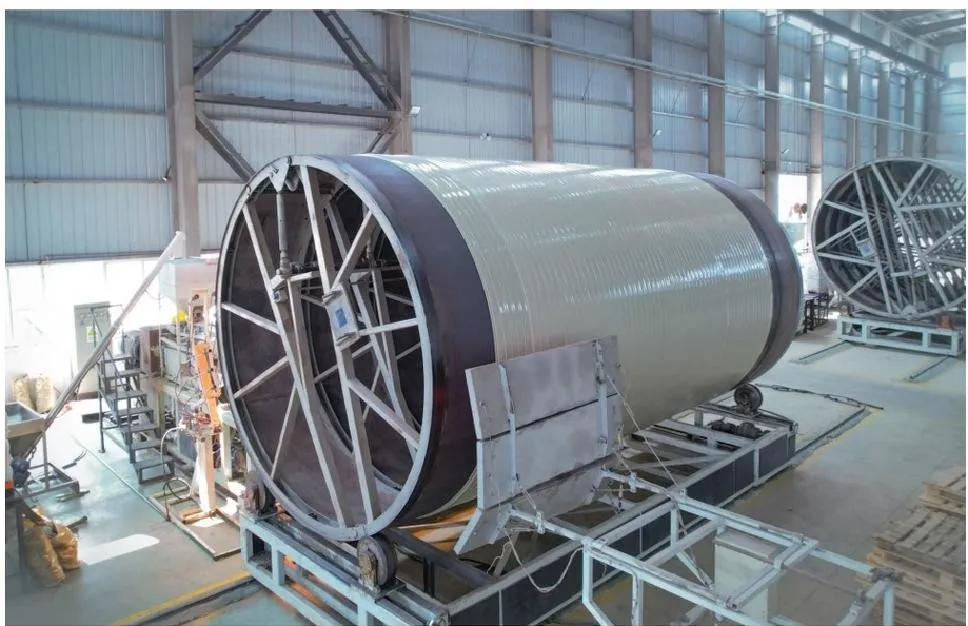
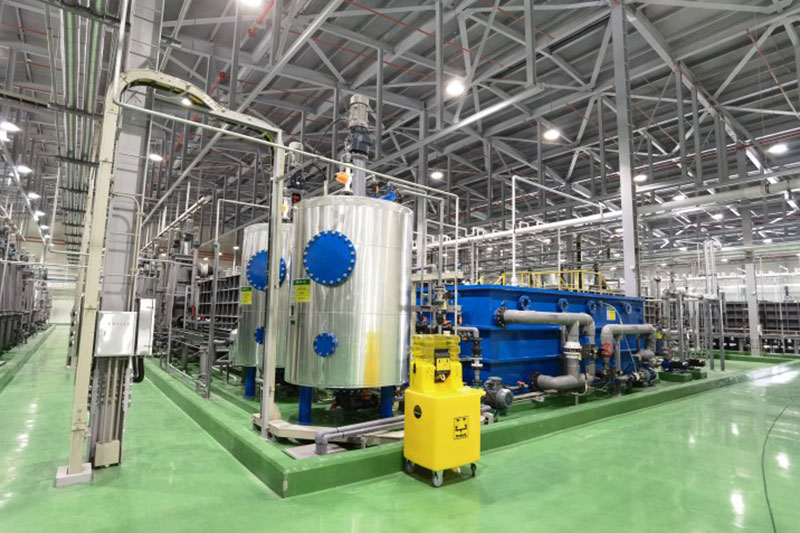
A mixing tank is a container specifically engineered to blend different substances into a uniform solution. Unlike simple storage tanks, mixing tanks integrate mechanical or hydraulic mixing mechanisms. Depending on the industry, they may include agitators, blades, paddles, or even magnetic stirrers to achieve the required consistency. The material of construction—commonly stainless steel, polyethylene, or fiberglass—is chosen based on chemical compatibility and hygiene requirements. For instance, food-grade stainless steel ensures sanitary conditions for dairy and beverage production. These tanks vary in capacity from a few liters for laboratory use to thousands of gallons in industrial plants.
Types of Mixing Tanks
Mixing tanks come in several designs tailored to specific applications.
-
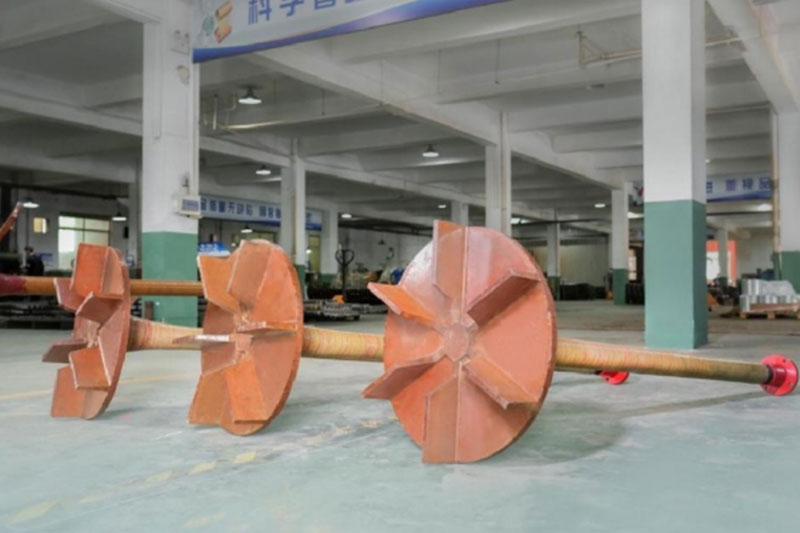
Agitated tanks – The most common, using impellers or paddles for effective circulation.
-
Static mixing tanks – Employ internal baffles or tubes, ideal for continuous flow blending.
-
Jacketed tanks – Equipped with heating or cooling jackets, suitable for temperature-sensitive products like chocolate or pharmaceuticals.
-
Pressurized tanks – Designed for mixing under pressure, often used in chemical reactions.
-
Sanitary mixing tanks – Manufactured to GMP or FDA standards, ensuring compliance in food and drug production.
Each type addresses unique requirements, balancing efficiency, safety, and precision.
Applications of Mixing Tanks
Mixing tanks play a vital role across industries:
-
Alimentation et boissons: For blending juices, dairy, sauces, and brewing beer.
-
Produits pharmaceutiques: Used in compounding drugs, mixing syrups, and preparing suspensions.
-
Produits chimiques: Essential for creating emulsions, paints, adhesives, and detergents.
-
Cosmétiques: Ensure smooth consistency in creams, lotions, and shampoos.
-
Traitement de l'eau: Mix flocculants, disinfectants, or pH stabilizers to improve water quality.
These tanks guarantee uniformity and reduce production downtime, enhancing overall output reliability.
Advantages of Using Mixing Tanks
Investing in a mixing tank provides multiple benefits:
-
Consistency: Ensures every batch meets the same quality standards.
-
Efficiency: Saves time and energy compared to manual mixing.
-
Évolutivité: Adaptable from small-scale labs to large industrial plants.
-
Safety & Hygiene: Modern designs meet industry regulations, reducing contamination risks.
-
Process Control: Many tanks integrate sensors and automation for precise monitoring of temperature, pH, and viscosity.
Such features make them indispensable in modern manufacturing.
Key Factors When Choosing a Mixing Tank
When selecting a mixing tank, companies should consider:
-
Material of Construction – Stainless steel for hygiene, plastics for cost-effectiveness.
-
Agitation Method – Impellers, paddles, or magnetic stirrers depending on viscosity.
-
Capacity & Scale – Match tank size to production volume.
-
Conformité réglementaire – Adherence to FDA, cGMP, or ISO standards.
-
Budget & Maintenance – Factor in durability and ease of cleaning.
Choosing correctly ensures optimal performance and long-term returns.
Conclusion
Mixing tanks provide uniform blending, efficiency, and scalability for industries worldwide. Selecting the right type ensures safe, consistent, and profitable production outcomes.

 Français
  English
  Deutsch
  Português
  Español
  Italiano