
Battery recycling can recover valuable metals, yet collection gaps, mixed chemistries, and process losses still reduce efficiency. Without improvement, costs rise; advanced recycling systems can close the loop.
Lithium battery recycling is technically efficient but systemically uneven. Advanced commercial processes can recover more than 95% of several critical battery elements, yet overall recycling efficiency remains lower because collection, sorting, transportation, battery chemistry, and refining all affect how much valuable material ultimately returns to battery production.
Understanding the difference between plant-level recovery und system-wide recycling efficiency reveals how efficient lithium battery recycling really is today.
Inhaltsübersicht
Wie effizient ist das Recycling von Lithium-Batterien heute?
At the processing level, modern lithium-ion battery recycling has become highly capable.
Advanced commercial recycling facilities can recover more than 95% of critical battery elements, einschließlich:
- Lithium
- Nickel
- Kobalt
- Mangan
- Kupfer
However, these figures describe what advanced recycling processes can achieve under suitable operating conditions. They do not represent the efficiency of the entire global recycling system.
The wider picture is more complicated.
According to the International Energy Agency, compared with theoretically available recycling feedstock in 2023, recovery exceeded 40% for nickel and cobalt, while lithium recovery reached only about 20%.
This difference highlights an important point:
High metal recovery inside a recycling plant does not automatically mean high recycling efficiency across the entire battery value chain.
Collection rates, logistics, battery availability, sorting accuracy, recycling economics, and downstream purification all influence the final result.
Why Is Lithium More Difficult to Recover?
Lithium has historically been more challenging to recover economically than metals such as nickel and cobalt.
Nickel- and cobalt-rich batteries contain relatively high-value materials, creating stronger economic incentives for recyclers to separate and refine them.
Lithium, however, often requires additional:
- Klärung
- Chemical separation
- Konzentration
- Kristallisation
- Qualitätskontrolle
before it can return to battery-grade production.
Battery chemistry creates another challenge.
Lithium-Eisenphosphat-Batterien (LFP) have become increasingly important in electric vehicles and energy-storage applications. Unlike nickel-rich battery chemistries, LFP batteries contain no nickel or cobalt.
As a result, the recoverable material value can be lower.
This means recycling efficiency cannot be evaluated using only one recovery percentage. Technical recovery, economic efficiency, product purity, and environmental performance must all be considered together.
What Does the Lithium Battery Recycling Process Look Like?
Industrial lithium battery recycling normally involves several processing stages.
A typical recycling route may include:
- Battery disassembly
- Crushing and pretreatment
- Rösten oder thermische Behandlung
- Auslaugung
- Lösungsmittel-Extraktion
- Metal separation
- Verdampfung und Kristallisation
- Elektrolytische Gewinnung oder Fällung
- Abwasser- und Abgasbehandlung
Different technologies may use pyrometallurgical, hydrometallurgical, or combined processes.
Among these methods, hydrometallurgical processing is particularly important for recovering metals from complex battery materials because chemical solutions can selectively dissolve, separate, and purify valuable components.
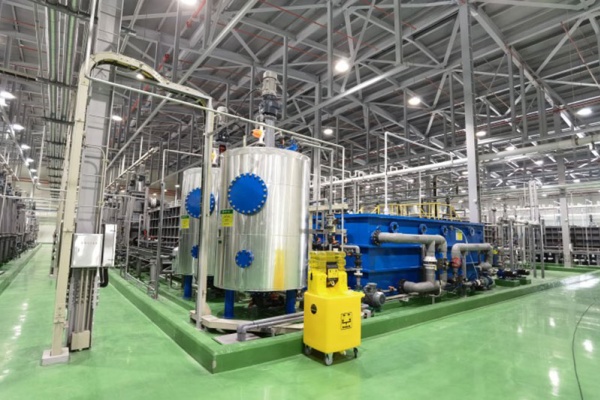
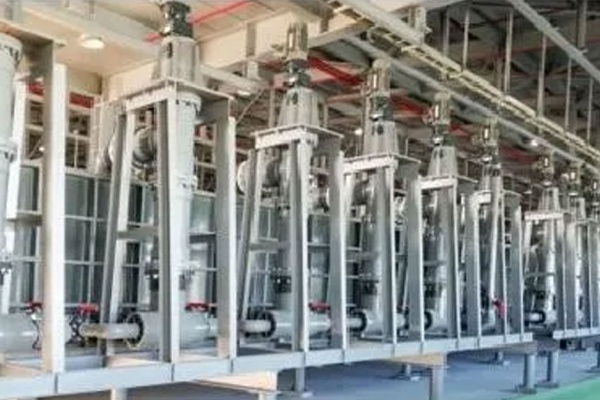
TYIC’s technical solutions for retired ternary power batteries can incorporate disassembly and crushing, roasting, leaching, extraction, crystallization, electrowinning, and precipitation.
The process can be customized according to feed composition and required product specifications to separate materials such as:
- Nickel
- Kobalt
- Mangan
- Lithium
Process customization is important because recycled battery feedstock is rarely uniform.
Differences in cathode chemistry, impurity concentration, particle size, pretreatment conditions, and metal concentration can significantly affect extraction performance.
What Determines Actual Recycling Efficiency?
A recycling plant cannot rely on theoretical recovery rates alone.
Real industrial efficiency depends on several interconnected factors.
1. Feedstock Composition
Different battery chemistries contain different concentrations of recoverable metals.
2. Extraction Selectivity
Efficient separation must recover target metals while minimizing contamination between different process streams.
3. Phase Separation
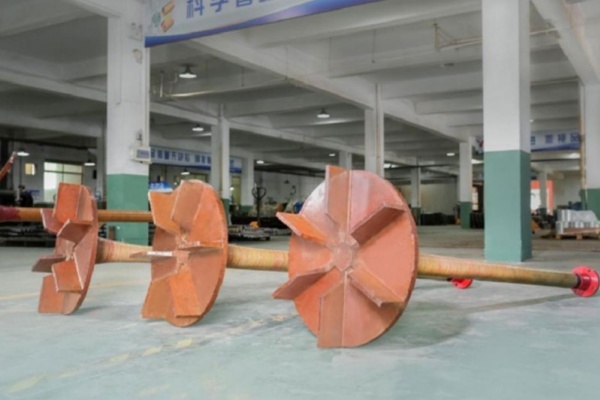
Poor separation between organic and aqueous phases can cause metal losses and increase downstream processing requirements.
4. Corrosion Resistance
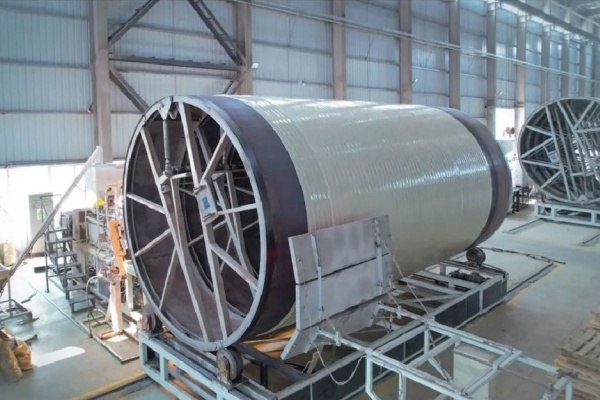
Leaching and extraction systems may involve highly corrosive chemical environments. Equipment materials therefore directly influence operational stability and service life.
5. Process Automation
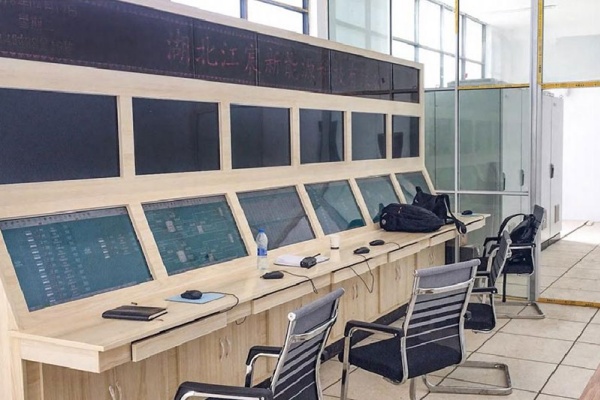
Accurate control of flow rate, temperature, pH, mixing intensity, and residence time can improve process consistency.
6. Environmental Treatment
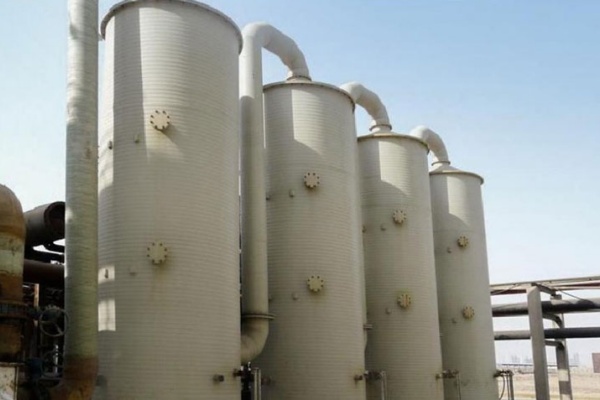
Efficient recycling also requires appropriate treatment of wastewater, waste gas, residues, and chemical by-products.
For industrial recyclers, efficiency therefore means more than simply extracting as much metal as possible.
It also means achieving stable operation, high product purity, lower material loss, controlled energy consumption, and compliant environmental performance.
Regulation Is Raising the Recycling Standard
Regulation is increasingly transforming recycling performance from a technical objective into a measurable requirement.
Under the EU Battery Regulation, lithium-based batteries are subject to specific recycling-efficiency and material-recovery targets.
Key requirements include:
- 65% recycling efficiency for lithium-based batteries
- 50% lithium recovery by the end of 2027
- 80% lithium recovery by the end of 2031
- 90% recovery of cobalt, copper, lead, and nickel by the end of 2027
- 95% recovery of these metals by the end of 2031
These targets also demonstrate why recycling efficiency and material recovery should not be treated as identical measurements.
A recycling process may recover a large percentage of total battery mass while still losing valuable lithium.
Conversely, a process may achieve high recovery of critical metals while generating residues that require additional treatment.
Collection and Feedstock Remain Major Bottlenecks
Another major constraint is simply the availability of recyclable batteries.
Electric-vehicle batteries can remain in service for many years. Consequently, a large proportion of batteries currently operating in vehicles have not yet reached end of life.
Manufacturing scrap therefore remains an important recycling feedstock.
The International Energy Agency expects manufacturing scrap to represent approximately two-thirds of available battery-recycling feedstock in 2030.
After 2035, however, end-of-life electric-vehicle and energy-storage batteries are expected to become increasingly important.
This creates a potential mismatch between recycling capacity and available feedstock.
A recycling plant may possess highly efficient technology, but low utilization can still reduce overall economic efficiency if insufficient battery material is available.
How Can Lithium Battery Recycling Become More Efficient?
The next generation of efficiency improvements will require optimization across the entire recycling chain.
Important areas include:
- Better battery collection networks
- Improved battery traceability
- More accurate feedstock classification
- Standardized pretreatment
- Chemistry-specific extraction processes
- Höhere Metallgewinnungsraten
- Improved product purity
- Efficient corrosion-resistant equipment
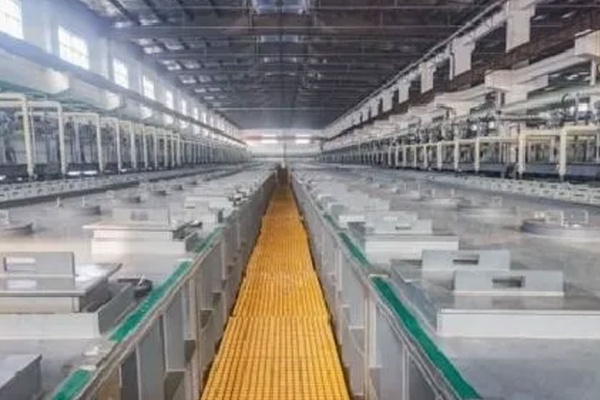
- Optimized process layouts
- Reliable wastewater and waste-gas treatment
- Closer integration between recyclers and battery-material manufacturers
For battery recyclers, the objective is increasingly clear: recover more valuable material while reducing chemical consumption, process losses, operating costs, and environmental impact.
Lithium battery recycling is already technically effective, but full circularity depends on making collection, processing, economics, and industrial-scale recovery equally efficient.
 Deutsch
  English
  Français
  Português
  Español
  Italiano