
Battery manufacturers face volatile critical-mineral supply, causing higher costs, production delays, and geopolitical risk. Diversified sourcing, recycling, and resilient processing can reduce dependence.
The battery supply chain depends heavily on lithium, nickel, cobalt, manganese, copper, and other critical minerals. Reducing risk requires diversified supply, stronger recycling systems, efficient hydrometallurgical recovery, reliable equipment, and closer coordination across mining, refining, battery-material production, manufacturing, and end-of-life recovery.
Understanding where dependence occurs helps battery and materials companies identify practical opportunities to improve supply security and resource efficiency.
Inhaltsübersicht
Why Critical Minerals Define Battery Supply Security
Modern battery production relies on a connected chain of:
Raw-material extraction → Refining → Precursor production → Cathode and anode manufacturing → Cell production → Pack assembly → Application → Recycling
Each stage depends on material availability, purity, price, and timely delivery.
Lithium is essential for most lithium-ion battery chemistries, while nickel, cobalt, and manganese remain important for many high-energy cathode systems. Copper is also widely used in electrical applications and battery current collectors.
Dependence becomes more serious when mining, refining, or intermediate-material production is concentrated in a limited number of regions or suppliers.
A disruption at one point can affect:
- Downstream production schedules
- Working-capital requirements
- Raw-material availability
- Delivery commitments
- Production continuity
For battery-material producers, critical-mineral dependence therefore involves more than mineral availability. It also includes processing capacity, logistics stability, technical consistency, and supplier qualification cycles.
Concentration Creates Operational and Commercial Risk
A battery company may have multiple suppliers and still remain exposed if those suppliers depend on the same refining hub, transportation route, or upstream mineral source.
Diese Art von hidden concentration can significantly reduce real supply-chain resilience.
Price Volatility
Sudden changes in the prices of lithium, nickel, cobalt, or manganese can alter feedstock economics and complicate procurement planning.
Long qualification cycles can increase the impact because battery production normally requires strict control over:
- Impurity levels
- Chemical composition
- Material consistency
- Product quality
- Prozessstabilität
Geopolitical and Logistics Risks
Critical-mineral flows may also be affected by:
- Trade restrictions
- Environmental regulations
- Geopolitical changes
- Unterbrechungen im Transportwesen
- Regional supply shortages
Supply-chain planning is therefore both a technical and strategic issue.
Companies need greater visibility across suppliers, processing partners, recycled feedstocks, inventories, logistics routes, and production capacity.
Recycling Can Reduce Dependence on Primary Resources
Battery recycling provides an important secondary source of critical minerals.
End-of-life batteries and battery-production scrap contain valuable materials that can be recovered and returned to the battery supply chain.
Hydrometallurgical processes can separate and recover materials such as:
- Nickel
- Kobalt
- Mangan
- Lithium
- Other valuable metallic components
When recovered materials meet the required specifications, they can be reused in battery-material production.
This circular approach does not completely replace primary mining. However, it can reduce dependence on imported raw materials, improve resource utilization, and create more localized supply chains.
Recycling facilities located near battery-material and battery-production plants can also help develop regional material loops between:
Battery manufacturing → Scrap recovery → Metal separation → Material refining → Battery-material production
According to TYIC company materials, the company has process experience in recovering battery-grade nickel, cobalt, manganese, and lithium from used power lithium batteries.
TYIC has participated in the design of more than 20 production lines in China and overseas and reports more than 100 service projects across its broader project experience.
Processing Equipment Supports Supply-Chain Resilience
Critical-mineral security is often discussed in terms of mining, mineral resources, and international trade.
Allerdings, processing equipment is another important part of supply-chain resilience.
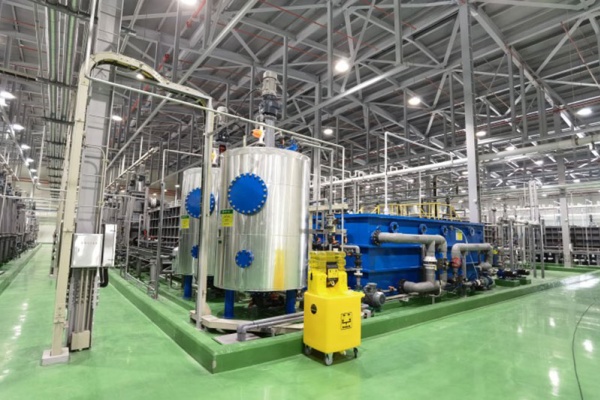
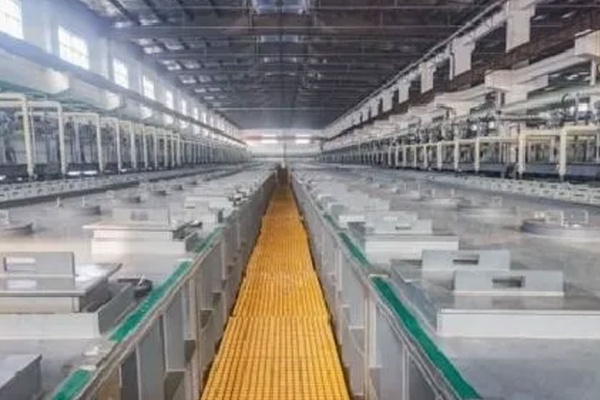
Recycling and refining facilities require reliable systems for:
- Extraction and separation
- Mixing
- Liquid storage
- Corrosion control
- Entfernung von Öl
- Behandlung von Abwässern
- Waste-gas treatment
If equipment is inefficient, difficult to maintain, or poorly matched to the chemical process, a plant may experience:
Lower recovery rates, higher operating costs, equipment downtime, unstable production, or inconsistent product quality.
These issues can weaken the supply-chain value of recycling capacity even when sufficient feedstock is available.
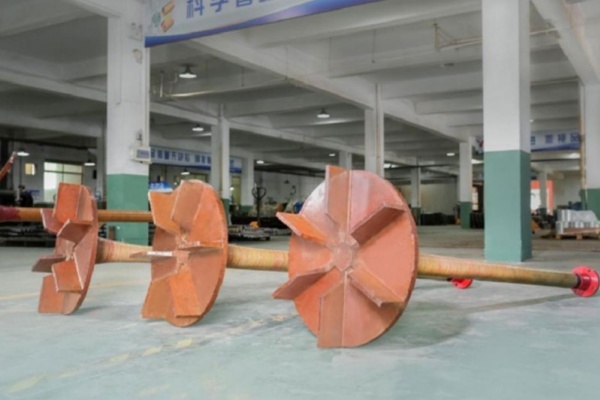
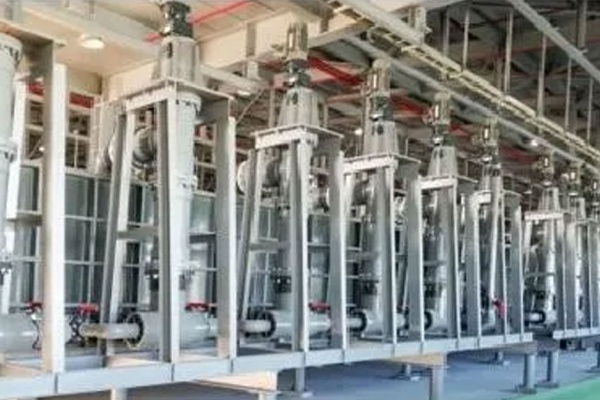
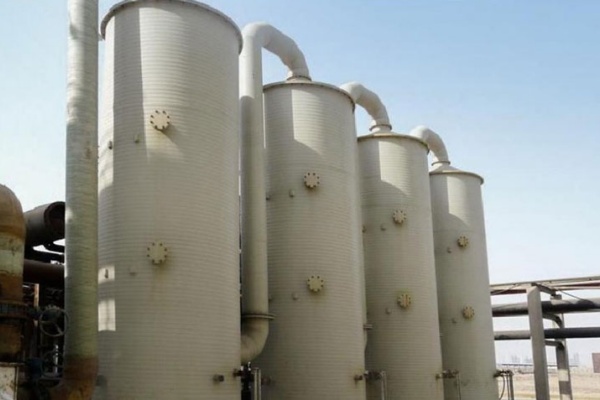
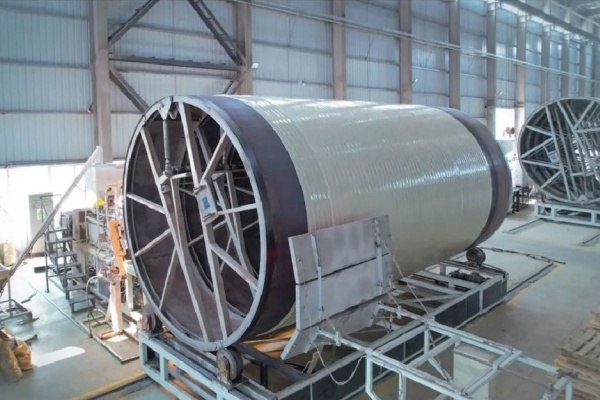
TYIC manufactures equipment including tubular mixing extractors and micro-interface oil removal systems, together with corrosion-resistant tanks, mixing equipment, plastic sheets, and environmental-protection systems.
Its engineering services cover:
Process design → Equipment layout → Materials selection → Electrical automation → Pipeline routing → Installation support → Commissioning assistance
Integrated Engineering Supports Flexible Capacity
Battery-material and recycling projects must often adapt to different feed compositions, production capacities, site conditions, and environmental requirements.
Standardized equipment alone may not address these differences.
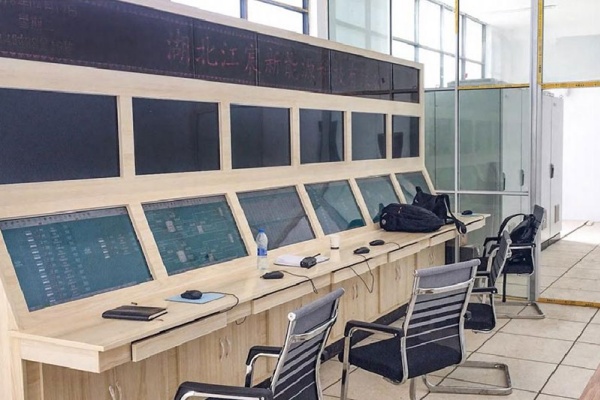
An integrated engineering approach can connect process requirements with:
- Equipment design
- Werkstatt-Layout
- Utility systems
- Pipeline design
- Automation
- Korrosionsbeständige Materialien
- Wastewater management
- Waste-gas treatment
This is particularly relevant for hydrometallurgical processes, where chemical compatibility, extraction performance, and process control can directly influence production reliability.
TYIC states that its technical teams cover process engineering, machinery, equipment, and control disciplines.
Its materials also describe cooperation with research and engineering organizations in hydrometallurgy and non-ferrous metal processing.
Such capabilities can support customized projects where clients need to balance:
Recovery efficiency | Operating cost | Plant footprint | Safety | Maintainability | Future expansion
Building a More Resilient Battery Supply Chain
No single strategy can completely remove dependence on critical minerals.
A stronger battery supply chain combines:
- Diversified raw-material sourcing
- Long-term supplier relationships
- Batterie-Recycling
- Regional processing capacity
- Inventory planning
- Material traceability
- Reliable production infrastructure
- Flexible engineering systems
Battery companies can improve risk visibility by mapping dependencies beyond direct suppliers.
This includes evaluating:
- Feedstock origins
- Refining locations
- Transportation bottlenecks
- Alternative suppliers
- Replacement lead times
- Recycled-material availability
- Qualified processing capacity
Scenario planning can then estimate how potential disruptions may affect production continuity, customer commitments, investment planning, and long-term supply security.
For equipment and engineering partners, resilience means designing systems that can operate consistently, meet product-quality requirements, and accommodate future changes in feed composition or production scale.
Reliable extraction, separation, storage, and environmental systems can therefore support both operational continuity and circular-material strategies.
Battery supply-chain resilience depends on diversified sourcing, efficient recycling, reliable processing, and adaptable engineering across the critical-mineral lifecycle.
 Deutsch
  English
  Français
  Português
  Español
  Italiano