
Inefficient mixing leads to wasted materials, product inconsistency, and costly downtime. Left unaddressed, these issues damage productivity and customer trust. A tank mixer offers reliable blending solutions.
A tank mixer is an industrial device used to agitate, blend, or homogenize liquid and semi-liquid substances inside storage tanks. It ensures uniform consistency, accelerates chemical reactions, improves heat transfer, and prevents sedimentation, making it vital in industries like food, beverage, chemical, pharmaceutical, and water treatment.
Keep reading to understand how tank mixers work, their types, and industry benefits.
Tank mixers are engineered to optimize mixing processes inside industrial tanks of various sizes and shapes. Their role goes beyond simple blending—these devices directly affect product quality, operational efficiency, and safety standards. By generating controlled turbulence, they allow materials to mix thoroughly without dead zones, ensuring that each batch meets the required specifications.
Inhaltsübersicht
How Does a Tank Mixer Work?
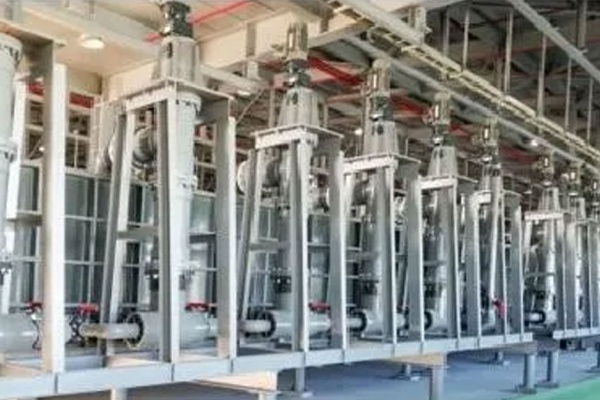
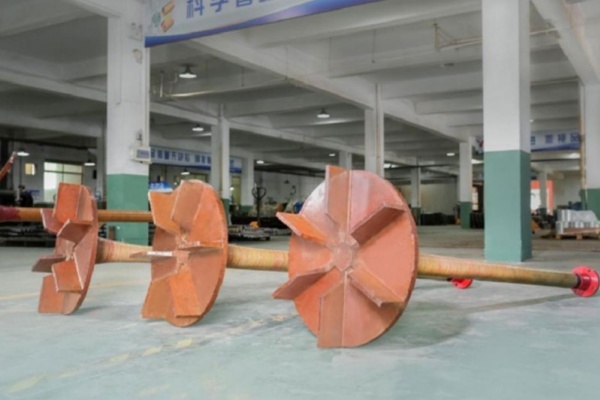
A tank mixer functions by creating fluid motion inside a container using impellers, paddles, or jet nozzles. The impeller, connected to a motor or gearbox, rotates to generate axial or radial flow. This circulation eliminates stagnant zones and distributes heat, chemicals, or particles evenly. Depending on the application, mixers may be mounted on the top, side, or bottom of the tank. For example, side-entry mixers are often used in large storage tanks to maintain continuous agitation, while top-entry mixers are common in high-viscosity applications.
Types of Tank Mixers
There are several types of tank mixers, each designed for specific industries and applications:
-
Top-entry mixers – Ideal for high-volume tanks and viscous materials.
-
Side-entry mixers – Commonly used in petroleum and chemical industries to prevent stratification.
-
Bottom-entry mixers – Effective in pharmaceutical or food industries where hygiene is critical.
-
Static mixers – Stationary devices with no moving parts, suitable for continuous mixing of liquids.
-
Portable mixers – Flexible solutions for small-batch mixing or temporary operations.
Each type is selected based on tank size, material properties, and mixing objectives.
Applications of Tank Mixers
Tank mixers play a critical role in industries such as:
-
Essen & Trinken: Ensuring uniform taste, texture, and quality in products like dairy, sauces, and beverages.
-
Pharmazeutika: Achieving consistent formulations, suspensions, and emulsions.
-
Chemikalien: Enhancing reactions, dissolving solids, or dispersing additives.
-
Wasseraufbereitung: Mixing chemicals for purification and preventing sediment buildup.
-
Kosmetika: Blending creams, gels, and lotions for smooth textures.
Their adaptability makes them indispensable across sectors that require precision and reliability.
Benefits of Tank Mixers
-
Improved Quality: Ensures uniformity in mixtures, avoiding inconsistencies.
-
Operational Efficiency: Reduces downtime and energy costs with optimized designs.
-
Vielseitigkeit: Suitable for liquids of varying viscosities.
-
Skalierbarkeit: Available in different sizes to match production demands.
-
Einhaltung der Vorschriften: Designed to meet industry standards for safety and hygiene.
By integrating tank mixers, companies enhance productivity while maintaining strict quality control.
Factors to Consider When Choosing a Tank Mixer
When selecting a tank mixer, businesses must evaluate:
-
Tank size and shape
-
Viscosity of the product
-
Desired mixing intensity
-
Mounting options
-
Energie-Effizienz
-
Maintenance requirements
Choosing the right mixer ensures cost savings, process stability, and long-term reliability.
Maintenance and Safety
Proper care extends the lifespan of tank mixers. Routine inspections, lubrication, and impeller checks prevent breakdowns. Safety measures, such as seals and guards, protect workers from accidents. Additionally, compliance with hygiene standards is essential in food and pharmaceutical industries to avoid contamination.
In short, tank mixers are indispensable tools that guarantee efficiency, product consistency, and compliance across industries.
A tank mixer ensures consistent blending, efficient processing, and reliable results across industries.
 Deutsch
  English
  Français
  Português
  Español
  Italiano