
Lithium-ion battery waste is growing rapidly. Without efficient recycling, valuable metals are lost and environmental risks increase. Advanced recycling technologies now provide scalable recovery solutions.
Lithium-ion batteries can be largely recycled using mechanical processing, hydrometallurgy, and emerging direct-recycling technologies. These methods recover valuable materials such as lithium, cobalt, nickel, and copper for reuse in new batteries. Although complete recovery of every component is still difficult, modern recycling systems can reclaim most critical metals and support a sustainable circular battery economy.
Understanding lithium-ion battery recycling helps industries recover critical resources, reduce environmental risks, and strengthen global battery supply chains.
Table of Contents
Why Lithium-Ion Battery Recycling Matters
Lithium-ion batteries power many modern technologies, including electric vehicles (EVs), energy storage systems (ESS), and portable electronics. As these technologies expand worldwide, millions of batteries will eventually reach their end of life.
Without proper recycling infrastructure, large volumes of spent batteries may become environmental hazards. Improper disposal can release toxic substances and heavy metals, which may contaminate soil and groundwater. At the same time, valuable materials contained in these batteries are lost.
Lithium-ion batteries contain high-value metals, including:
Lithium
Cobalt
Nickel
Manganese
Copper
Aluminum
Mining these metals requires significant energy, water consumption, and environmental disturbance. In addition, the global supply of certain materials—especially cobalt and lithium—can be affected by geopolitical and market uncertainties.
Recycling helps address these challenges by enabling resource recovery and supply chain stability. Recovered metals can be reused in the manufacturing of new batteries, reducing the need for virgin mining.
For industries such as battery manufacturers, recycling companies, and material processors, recycling also creates economic opportunities. Valuable recovered materials can be reintegrated into production cycles, helping build a closed-loop battery economy.
How Lithium-Ion Batteries Are Recycled
Recycling lithium-ion batteries involves several carefully controlled steps designed to safely separate and recover valuable materials.
1. Collection and Safe Pre-Treatment
The process begins with collection, transportation, and safe storage of used batteries. Because lithium-ion batteries can still retain energy, they must be carefully discharged to prevent fire or explosion risks.
After discharge, batteries are dismantled or processed in controlled environments to prepare them for further treatment.
2. Mechanical Separation
During the mechanical stage, batteries are crushed or shredded using specialized equipment. This process separates several material streams, including:
Steel and aluminum casings
Copper foils
Plastic components
Active material powder
The fine powder produced during shredding is commonly referred to as “black mass.”
Black mass contains the most valuable battery materials, including:
Lithium compounds
Cobalt
Nickel
Manganese
Recovering metals from this black mass is the key objective of advanced recycling systems.
3. Hydrometallurgical Extraction
Hydrometallurgy is currently one of the most widely used methods for recovering battery metals.
In this process:
Black mass is treated with chemical leaching solutions.
Valuable metals dissolve into the solution.
Separation and purification techniques isolate each metal.
Through controlled reactions, high-purity compounds such as:
Lithium carbonate
Nickel sulfate
Cobalt sulfate
can be produced.
These compounds are directly usable in new cathode material production, making hydrometallurgical recycling highly attractive for battery manufacturers.
Advanced extraction systems—such as continuous extraction equipment and optimized mixing technologies—can significantly improve recovery efficiency while reducing chemical consumption.
4. Pyrometallurgical Processing
Another recycling method involves high-temperature smelting, also known as pyrometallurgy.
In this process, batteries are heated in furnaces where metals melt and separate according to density and chemical properties.
Pyrometallurgy can efficiently recover:
Cobalt
Nickel
Copper
However, lithium recovery is less efficient in high-temperature systems, which is why many recycling facilities combine pyrometallurgical and hydrometallurgical processes.
5. Direct Recycling (Emerging Technology)
A promising new approach is direct cathode recycling.
Instead of breaking cathode materials down into basic metals, direct recycling attempts to restore and reuse the original cathode structure.
Potential advantages include:
Lower energy consumption
Reduced chemical use
Lower processing costs
Higher material retention
Although still under development, direct recycling may become an important technology as the battery recycling industry evolves.
Can Lithium-Ion Batteries Be 100% Recycled?
Despite major technological progress, fully recycling every component of a lithium-ion battery remains difficult.
Several factors contribute to this challenge:
⚙ Complex battery designs
Different manufacturers use different chemistries and structures.⚙ Material mixtures
Some materials are difficult to separate economically.⚙ Low-value components
Certain plastics and binders may not justify the cost of recovery.⚙ Electrolyte recovery challenges
Liquid electrolytes are difficult to recycle efficiently.Currently, modern recycling systems can recover a large percentage of valuable metals, particularly:
Cobalt
Nickel
Copper
Aluminum
Lithium recovery rates are also improving as hydrometallurgical and extraction technologies continue to advance.
As recycling technologies mature, recovery efficiency is expected to increase significantly.
The Role of Advanced Industrial Recycling Equipment
Efficient lithium-ion battery recycling relies heavily on advanced industrial processing systems.
Specialized equipment plays a key role in:
Material separation
Chemical extraction
Metal purification
Process efficiency optimization
For large-scale recycling facilities, continuous extraction equipment and optimized mixing technologies can significantly improve metal recovery rates.
Customized industrial systems allow recycling plants to:
✔ Adapt to different battery chemistries
✔ Increase operational stability
✔ Reduce chemical consumption
✔ Improve overall process efficiencyThese technologies are especially important in industries such as battery recycling and non-ferrous metal recovery, where precise separation processes directly impact economic performance.
The Future of Lithium-Ion Battery Recycling
As global demand for electric vehicles and energy storage grows, lithium-ion battery recycling will become increasingly important.
Several key trends are shaping the industry’s future:
🔋 Rapid expansion of EV markets
🌍 Stronger environmental regulations
♻ Development of circular battery supply chains
🏭 Large-scale recycling infrastructure investments
Battery manufacturers are also beginning to design batteries with recyclability in mind, which could significantly simplify future recycling processes.
In the long term, a closed-loop battery ecosystem may emerge where materials from old batteries are directly reused in new battery production.
Lithium-ion batteries cannot yet be fully recycled, but modern technologies recover most valuable metals, supporting sustainable battery production and circular resource use.
Can a Lithium-Ion Battery Be Fully Recycled?
Related Products
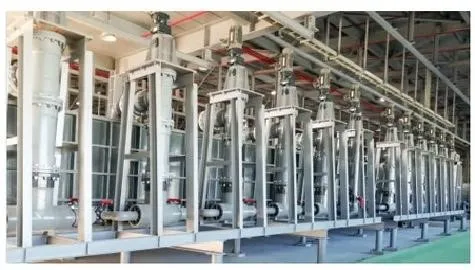
Table of Contents
 English
  Deutsch
  Français
  Português
  Español
  Italiano