
Inefficient tank design can waste land, delay projects, and increase costs—choosing between circular and square tanks is crucial for optimal performance and savings.
Circular and square tanks each present distinct advantages in geometry, land use, and construction efficiency. TYIC NEW ENERGY’s patented materials and manufacturing technologies ensure maximum durability, cost-effectiveness, and performance in both designs.
Let’s examine how circular and square tanks compare, and how TYIC NEW ENERGY’s expertise delivers efficiency in every dimension.
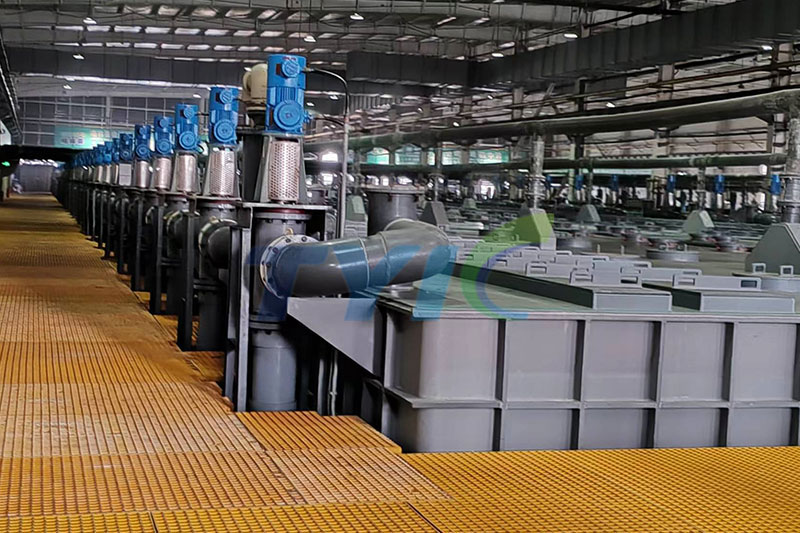
Table of Contents
Efficiency Of Available Land
When industrial facilities face land constraints, every square meter counts. Circular tanks, while excellent at distributing stress, often leave unused corners in rectangular plots. By contrast, square tanks make full use of available land, aligning perfectly with property boundaries and neighboring infrastructure.
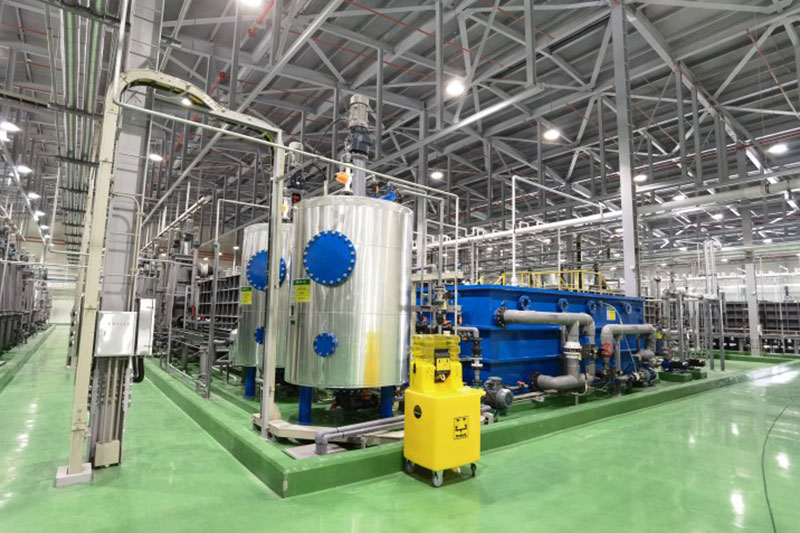
TYIC NEW ENERGY leverages this advantage in large-scale EPC projects, particularly for wastewater treatment plants, lithium battery recycling facilities, and chemical processing units. By designing modular square tanks that fit seamlessly into tight layouts, TYIC NEW ENERGY reduces site footprint by up to 15% compared to circular installations.
In multi-tank arrays, square designs allow for grid-style positioning, enabling shared piping corridors and minimizing connection distances. This not only lowers construction costs but also simplifies operational maintenance. For clients in urban industrial parks where land is expensive, this spatial efficiency directly improves return on investment.
Speed Of Construction
Construction speed impacts both capital expenditure and production schedules. Circular tanks often require complex curved formwork, specialized welding, or on-site assembly of arc panels—processes that extend installation time.
Square tanks, particularly those built from TYIC NEW ENERGY’s high-precision PPH, HDPE, or PVC sheets, are manufactured with straight edges and right-angle corners, enabling rapid assembly. The company’s CNC cutting systems and automatic extrusion welding machines guarantee perfect fitment and uniform weld quality.
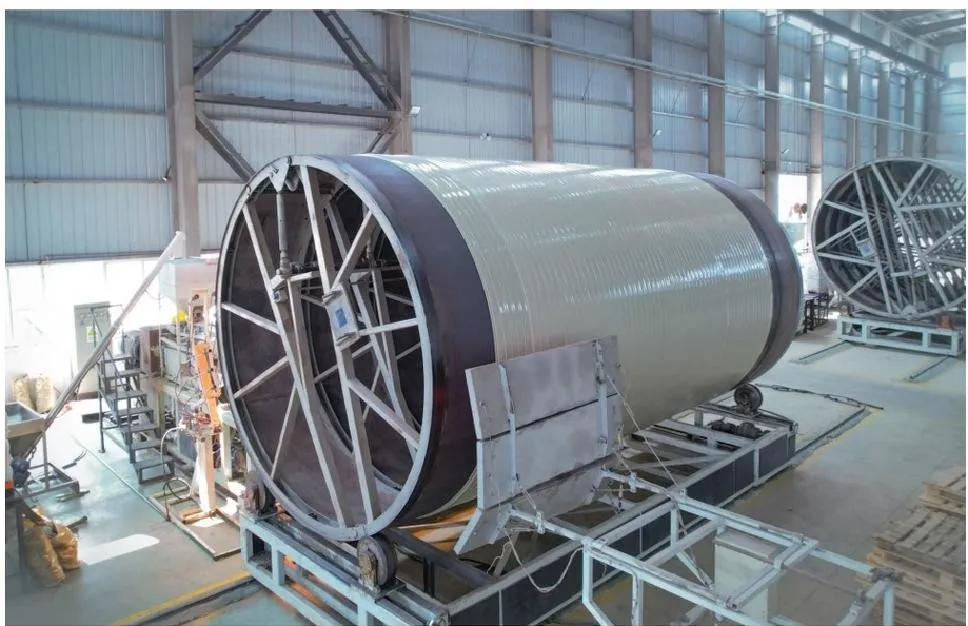
TYIC NEW ENERGY’s spiral extrusion winding and panel joining technology, already proven in large PPH tank projects, is adapted for square tank construction to reduce human error and ensure weld coefficients ≥ 0.9. As a result, on-site installation can be completed up to 30% faster than with conventional methods, enabling clients to begin operations ahead of schedule.
Efficiencies Of Geometry
From a structural standpoint, circular tanks offer natural pressure distribution, reducing localized stress points. However, square tanks excel in volumetric efficiency per footprint, storing more liquid within the same site boundaries.
Square tanks also offer superior modular integration—multiple tanks can be positioned side-by-side without wasted space, and even stacked vertically in certain applications. This geometric efficiency is especially important in indoor facilities, where square layouts align with columns and walls.
To counteract potential deformation under hydrostatic pressure, TYIC NEW ENERGY incorporates internal reinforcement ribs and multi-layer thermoplastic welding. The use of patented raw material pretreatment technology—including dual-stage particle size separation and low-temperature preheating—ensures that every sheet and weld joint achieves maximum density and corrosion resistance.
This combination of design geometry and materials engineering allows TYIC NEW ENERGY’s square tanks to perform reliably under high-load conditions without compromising service life.
Tank Design
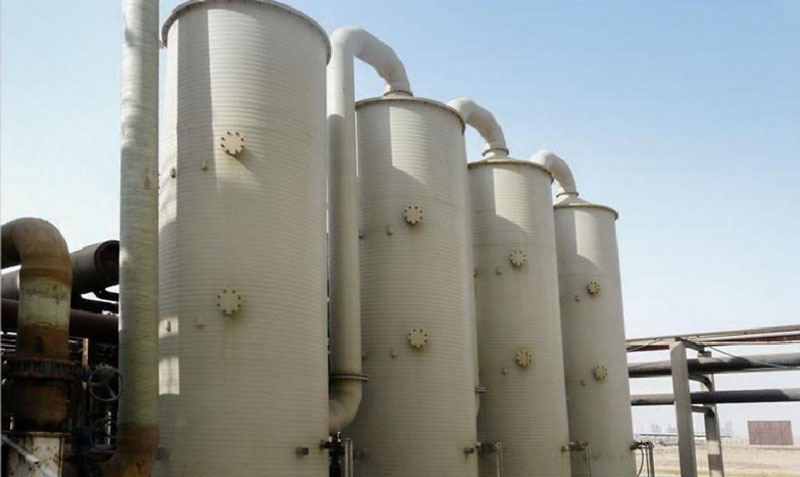
Tank selection involves balancing shape with application-specific requirements. Circular tanks often serve in open-air municipal water treatment or large bioreactor systems, while square tanks are favored for chemical containment, extraction equipment, and modular wastewater treatment units.
TYIC NEW ENERGY’s square tank designs integrate:
High-performance thermoplastics (PPH, HDPE, PVC) with chemical resistance to acids, alkalis, and salts.
UV stabilizers and anti-aging additives for outdoor durability up to 30 years (-20°C to 100°C).
Custom internal partitions to create multi-stage process zones within a single tank body.
Seamless extrusion-wound corner reinforcement for maximum leak prevention.
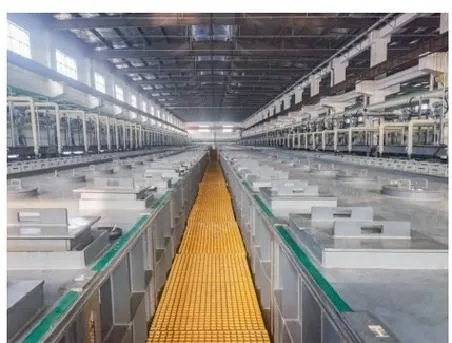
The company’s manufacturing base in Chongren Industrial Park, covering 46,000㎡ (Phase I: 25,000㎡ operational), houses automated production lines capable of producing 10,000 tons/year of PPH/PVC sheet materials. This vertical integration allows TYIC NEW ENERGY to control quality from raw material pretreatment to final tank installation.
Summary
Circular tanks offer structural efficiency, while square tanks maximize land use and modularity—TYIC NEW ENERGY ensures both deliver unmatched durability and cost savings.
 English
  Deutsch
  Français
  Português
  Español
  Italiano