
Unchecked industrial emissions harm the environment, damage equipment, and risk regulatory penalties—industrial waste gas treatment is the only sustainable solution to protect industries and communities.
Industrial waste gas treatment involves advanced abatement systems designed to neutralize, capture, and destroy harmful emissions from factories, ensuring compliance, worker safety, and long-term environmental protection.
Keep reading to explore proven technologies and industry solutions that safeguard the future.
Table of Contents
Abatement Concepts For Waste Gas Treatment
The foundation of industrial waste gas treatment lies in abatement concepts—strategies designed to eliminate or reduce harmful emissions before they reach the atmosphere.
Key abatement methods include:
-
Oxidation and Combustion: Break down VOCs and hydrocarbons into harmless byproducts.
-
Absorption and Scrubbing: Liquids neutralize acid gases like HCl, HF, SO₂.
-
Adsorption: Activated carbon captures VOCs and heavy metals.
-
Catalytic Reactions: Decompose gases at lower temperatures, reducing energy consumption.
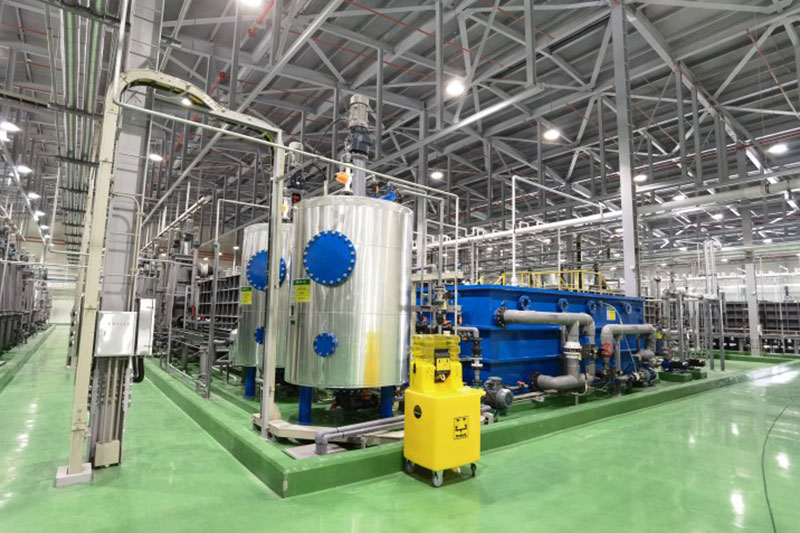
👉 Case Example: TYIC NEW ENERGY applied a hybrid catalytic-oxidation and wet scrubbing solution for Tianneng Co., Ltd. in battery manufacturing. The system successfully removed acidic vapors and VOCs while recovering heat for reuse, lowering both emissions and energy bills by 18%.
Gas Treatment Technologies For Various Industries
Different industries require tailored industrial waste gas treatment solutions:
-
Chemical Manufacturing: Scrubbing systems for HCl, SO₂, and NOx.
-
Semiconductors: Plasma-wet systems for fluorinated gas treatment.
-
Battery Recycling: VOC and acidic gas abatement with catalytic scrubbers.
-
Metallurgy: Dust collectors for heavy metals.
-
Power Plants: Flue gas desulfurization and NOx reduction.
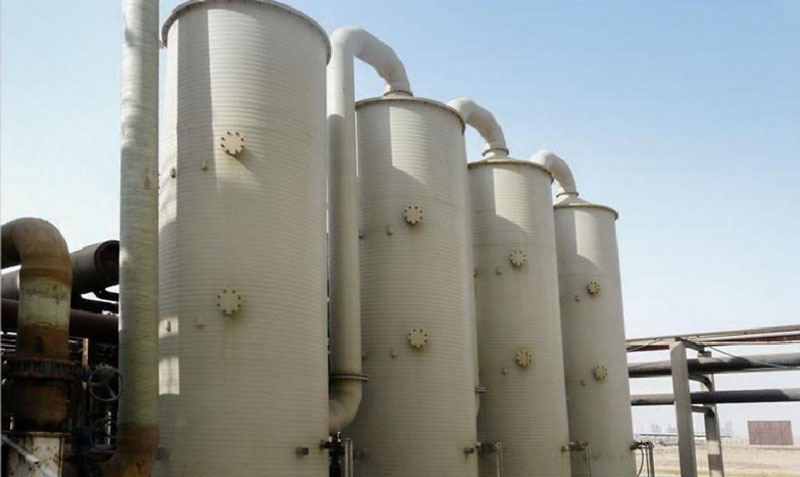
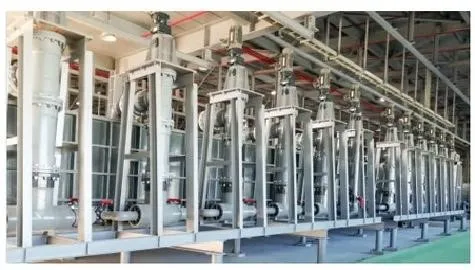
👉 Case Example: For Ganfeng Lithium, TYIC NEW ENERGY engineered a custom scrubber tower paired with a rotary dust collector. This system reduced fluoride emissions by 95% and ensured compliance with European environmental standards. The modular design allowed quick installation without disrupting ongoing production.
Current And Future Challenges In The Treatment Of Industrial Waste Gases
Challenges include:
-
Stricter global regulations.
-
Complex new pollutants from advanced manufacturing.
-
High energy demand of abatement systems.
-
Byproduct waste requiring secondary treatment.
-
Push for circular economy and emission reuse.
👉 Case Example: In cooperation with Ningbo Lygend, TYIC NEW ENERGY deployed an energy-efficient plasma-wet system for nickel-cobalt processing. The advanced control system automatically adjusts plasma energy based on gas concentration, cutting electricity usage by 22% compared with traditional systems.
Industrial Technologies For Gas Treatment
Core technologies include:
-
Wet scrubbers
-
Plasma systems
-
Catalytic oxidizers
-
Thermal oxidizers
-
Electrostatic precipitators (ESP)
-
Rotary dust collectors
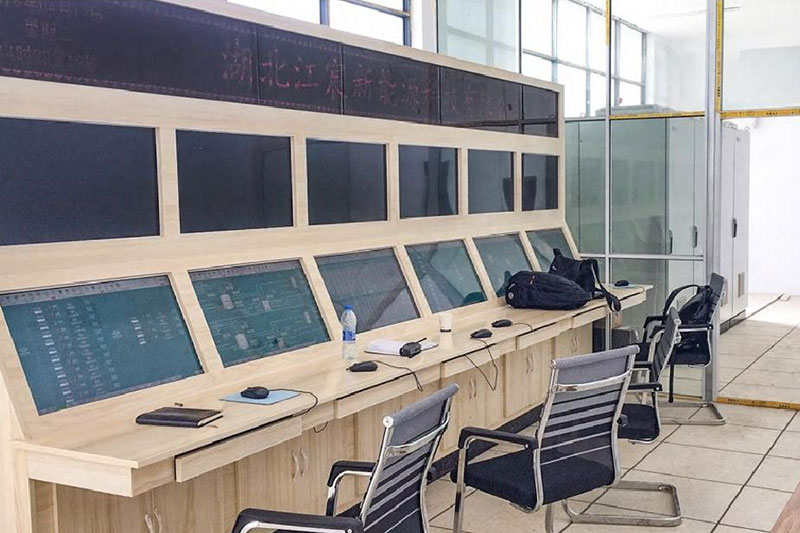
👉 Case Example: Wanhua Chemical adopted TYIC NEW ENERGY’s multi-stage waste gas treatment system. The solution combined a packed bed scrubber with catalytic oxidation, achieving 99% VOC removal. The integration of spark-leak detection and automated monitoring ensured zero downtime for over 12 months.
Service And Maintenance For Waste Gas Treatment Systems
Long-term success requires continuous service:
-
Regular inspections
-
Filter and media replacement
-
Catalyst regeneration
-
Smart monitoring with IoT sensors
👉 Case Example: For ECOPRO in South Korea, TYIC NEW ENERGY not only supplied a scrubber system but also signed a 5-year EPC+M contract (Engineering, Procurement, Construction, and Maintenance). Predictive monitoring reduced maintenance costs by 30% while guaranteeing continuous compliance with South Korean environmental regulations.
Conclusion
Industrial waste gas treatment ensures compliance, sustainability, and cost-efficiency—TYIC NEW ENERGY delivers proven, customized solutions trusted by leading global industries.
 English
  Deutsch
  Français
  Português
  Español
  Italiano