
Inefficient gas treatment leads to regulatory violations, equipment corrosion, and environmental harm—absorption towers offer a proven solution for cleaner emissions and process reliability.
An absorption tower is an industrial system used to remove specific gases from a mixture by absorbing them into a liquid solvent. It is widely used for air pollution control, chemical production, and gas purification.
Curious how absorption towers actually work? Let’s break it down step by step.
Indice dei contenuti
What Is An Absorption Tower?
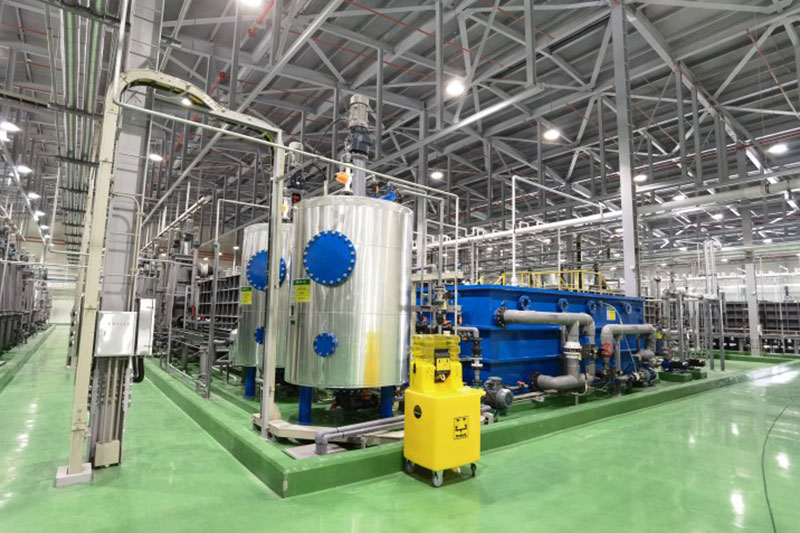
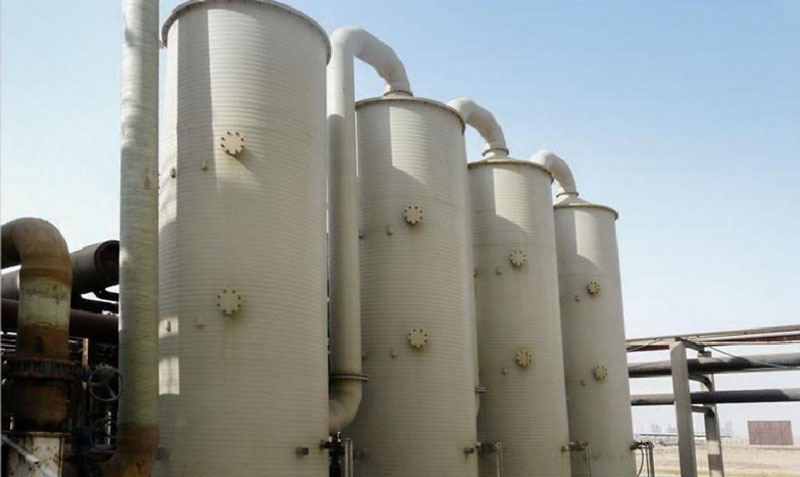
An absorption tower, also known as a gas scrubber or absorber, is a vertical vessel designed to remove specific components from a gas stream by transferring them into a liquid solvent. The principle is simple: gas flows countercurrent or cocurrent to the liquid inside the tower, allowing targeted contaminants—such as SO₂, HCl, NH₃, or CO₂—to dissolve into the liquid phase.
These towers are critical in industries like chemical manufacturing, flue gas treatment, fertilizer production, and semiconductor fabrication. Depending on the process, they may be filled with structured packing, random packing, or trays to increase contact area and absorption efficiency.
By design, absorption towers maximize gas-liquid interaction, optimize residence time, and ensure high removal efficiency. The structure, materials, and configuration are tailored to the gas and solvent types, operating pressures, and environmental conditions, ensuring reliable long-term operation under aggressive chemical exposure.
What Are The Functions Of The Absorption Towers?
The primary function of an absorption tower is to facilitate mass transfer—specifically the absorption of unwanted or valuable gaseous substances into a liquid medium. This simple-sounding process supports a wide array of critical tasks:
Air pollution control: Absorption towers remove harmful gases like sulfur dioxide (SO₂), nitrogen oxides (NOx), and hydrogen chloride (HCl) before releasing the gas into the atmosphere.
Chemical recovery: Valuable by-products like ammonia or hydrochloric acid can be captured and reused through absorption.
Gas conditioning: Towers can humidify, cool, or clean gas streams ahead of further processing.
Process purification: Industrial plants use absorption to refine or purify gases for downstream use, such as CO₂ removal from natural gas.
An absorption tower ensures cleaner emissions, protects equipment from corrosion, recovers materials of value, and maintains process integrity—especially in operations involving reactive or hazardous gases.
What Are The Main Components Of The Absorption Towers?
While designs may vary by industry, most absorption towers share several essential components:
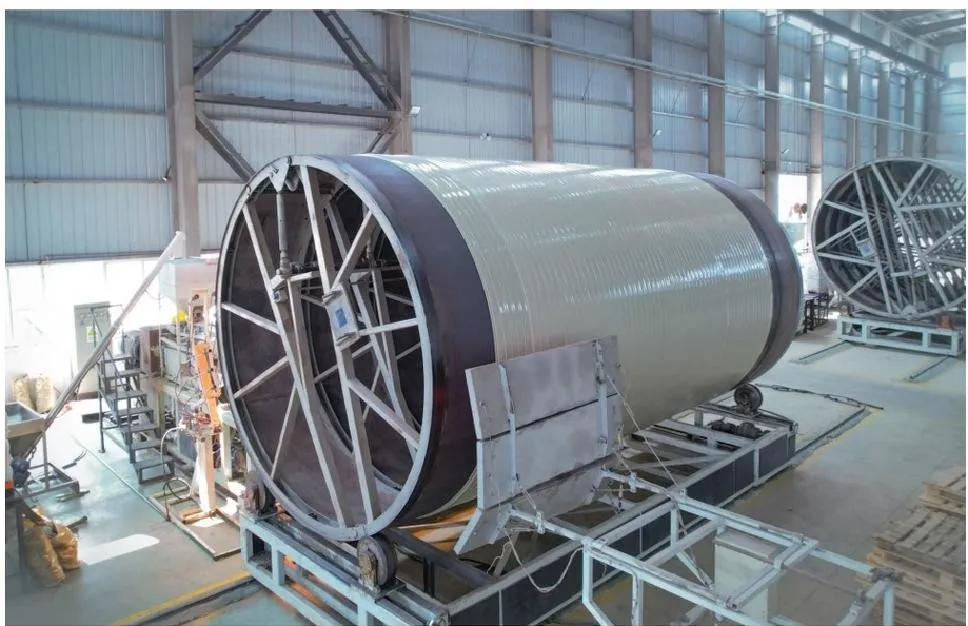
Column body: Usually a cylindrical vertical vessel constructed from corrosion-resistant materials like stainless steel, FRP, or HDPE.
Packing or trays: Internal elements that create high surface area for gas-liquid contact. Packing may be structured (e.g., corrugated sheets) or random (e.g., ceramic saddles).
Gas inlet and outlet: Positioned to ensure gas flows either upward (countercurrent) or along with the liquid (cocurrent).
Liquid distribution system: Sprays or nozzles that evenly distribute the absorbent liquid over the packing.
Liquid collector and outlet: Collects used liquid for recycling or discharge.
Mist eliminator: Located near the gas outlet to prevent carryover of liquid droplets.
Instrumentation: Flow meters, pH sensors, pressure gauges, and level controllers ensure stable and safe operation.
Every part is engineered for compatibility with the process gas and liquid to ensure reliable, efficient, and low-maintenance performance.
How Does The Absorption Tower Work?
The absorption tower functions on the principle of mass transfer between a gas and a liquid. When gas enters the column and comes into contact with the counter-flowing liquid, specific components in the gas dissolve into the liquid based on solubility and partial pressure.
Here’s how it works step by step:
Gas entry: The contaminated gas enters through the bottom or side of the tower.
Liquid spray: Absorbent liquid is sprayed from the top or distributed across trays or packing material.
Interaction: As gas rises and liquid descends, intimate contact occurs across packing surfaces or tray decks, promoting transfer of solutes.
Absorption: Target gas molecules dissolve into the liquid, removing them from the stream.
Clean gas exit: The purified gas exits the top of the tower.
Liquid discharge: The now-contaminated liquid is collected at the bottom and either regenerated or treated for disposal.
The process efficiency depends on contact time, temperature, gas and liquid flow rates, solvent selection, and tower design. With proper tuning, absorption towers can achieve over 95% removal efficiency for many pollutants.
How Do You Clean And Maintain The Absorption Tower?
To maintain long-term performance, regular inspection and cleaning of the absorption tower are essential. Accumulation of solids, biofouling, scaling, or corrosion can reduce efficiency or cause structural damage.
Cleaning procedures typically include:
Shutdown and isolation: Ensure the system is de-energized and purged of residual gases.
Draining the tower: Remove all absorbent liquid and flush with water or cleaning solution.
Internal inspection: Visually inspect for deposits, damage, or clogging in the packing and trays.
Mechanical cleaning: Use high-pressure water, brushes, or chemical descalers to remove fouling.
Mist eliminator cleaning: Carefully remove and clean the demister pads or vane elements.
Instrumentation check: Verify and recalibrate sensors and control valves.
TYIC NEW ENERGY recommends routine inspections every 6–12 months, depending on usage, and provides modular tower designs for easy access and quick maintenance. Preventive care ensures consistent absorption rates, avoids process interruptions, and extends the life of the equipment.
Which Is The Most Common Application Of The Absorption Towers?
The most widespread application of absorption towers is in air pollution control, especially for removing acidic gases from industrial exhaust.
In chemical and metallurgical industries, towers absorb hydrogen chloride (HCl), sulfur dioxide (SO₂), and other corrosive gases from furnace or reaction exhaust. These pollutants must be treated before release to meet strict environmental regulations.
Power plants use flue gas desulfurization (FGD) towers to absorb SO₂ using limestone or magnesium hydroxide slurries. Fertilizer plants use towers to capture ammonia (NH₃), while semiconductor manufacturers remove fluorides and acid vapors.
Other common applications include:
CO₂ removal from natural gas
VOC scrubbing in paint and coating industries
Solvent recovery
Odor control in wastewater treatment
Due to their flexibility, efficiency, and customizability, absorption towers have become indispensable in protecting both equipment and the environment.
What Is Single Component Absorption In Absorption Towers?
Single component absorption refers to the process where only one specific gaseous solute is targeted for removal from a gas stream using a solvent specifically chosen for that gas.
For example:
CO₂ in natural gas: Absorbed using amine-based solvents like MEA or DEA.
NH₃ scrubbing: Ammonia is absorbed into water or acidic solutions like sulfuric acid.
HCl capture: Hydrochloric acid vapor is absorbed in water to form aqueous HCl.
This contrasts with multicomponent absorption, where several gases are removed simultaneously. Single component absorption is often easier to control, more efficient, and allows for solvent regeneration or product recovery.
The process design focuses on maximizing absorption rate and solvent reuse. Parameters like gas loading, temperature, flow rates, and contact surface area are carefully optimized.
Absorption towers designed for single component systems are typically smaller, with highly specialized materials and packing configurations tailored for the specific chemical behavior of the solute and solvent.
Sintesi
Absorption towers are essential for efficient gas scrubbing, environmental compliance, and safe industrial operations across countless applications.
 Italiano
  English
  Deutsch
  Français
  Português
  Español