
Progettazione del processo di trattamento dei gas di scarico
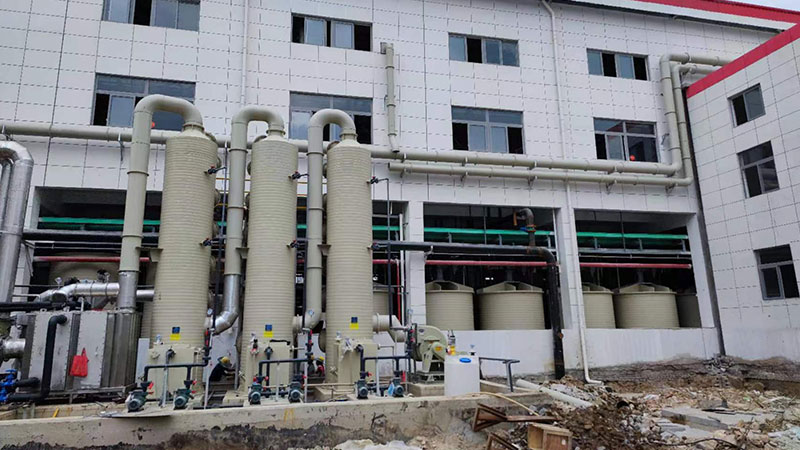
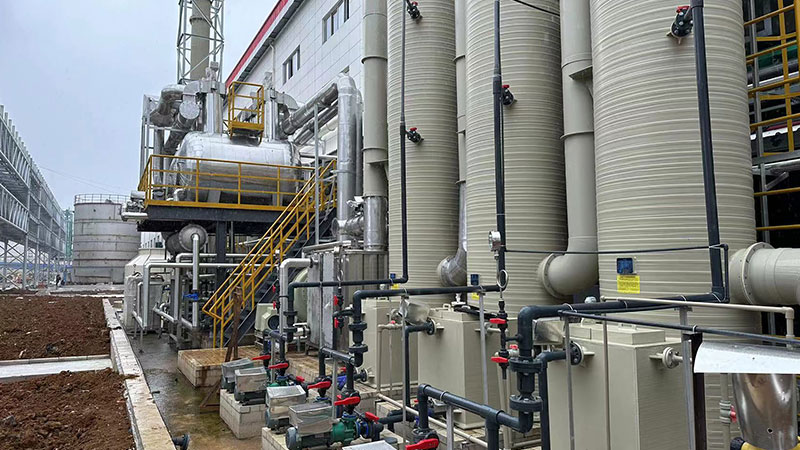
Il organic waste gas pretreatment consists of two – stage alkali washing, one – stage water washing, e surface cooling mist removal.
- Il alkali washing tower removes sulfuric acid mist and hydrogen chloride from the waste gas.
- After acidic components are removed, a water washing tower buffers to reduce the impact of entrained lye on subsequent adsorption equipment.
Pre – treated waste gas (acid – removed, de – watered, humidity – adjusted) is pressurized by a fan and sent to an activated carbon adsorption tank under suitable conditions. Once the activated carbon is saturated after a period of adsorption, its performance declines.
Periodic desorption of the organic waste gas from the activated carbon surface is required to restore its adsorption ability. This process uses the fact that activated carbon has high adsorption capacity at room temperature and low capacity at high temperature to recycle it, known as temprature swing adsorption in the industry.
Purified waste gas is discharged from the chimney’s high point, which has detection and online monitoring ports, along with a monitoring platform and guardrails, meeting relevant local and national standards.
TYIC is engaged in the manufacturing of acid mist absorption towers 、corresponding pipeline and relevant equipment, as well as the treatment of acid mist absorption in unorganized gases and the handling of acid-containing waste gases. (The acid mist removal rate of TYIC’s process acid mist absorption tower is 100%.)
TUTTO CIÒ CHE NON SEI RIUSCITO A TROVARE.
Vantaggi della nostra azienda
TYIC si concentra sul mercato globale. Abbiamo i seguenti vantaggi:
- Ciclo di pagamento personalizzato
- Basso costo
- Team tecnico professionale
- Controllo di qualità rigoroso.
- Risposta rapida o entusiasmo.
INVIATECI UN'E-MAIL
Richiesta di preventivo
In base alle esigenze del cliente e alle caratteristiche del prodotto, completiamo la pianificazione e la progettazione dell'intera linea di produzione di lisciviazione ed estrazione.
 Italiano
  English
  Deutsch
  Français
  Português
  Español