
Spent batteries contain valuable metals, but poor recycling design causes resource loss, unstable recovery, and pollution risks. A closed-loop process solves this systematically.
A closed-loop Li-ion battery recycling process recovers nickel, cobalt, manganese, and lithium through controlled pretreatment, leaching, extraction, purification, crystallization, and precipitation. TYIC provides customized process design, corrosion-resistant equipment, extraction systems, environmental protection units, automation support, installation, commissioning, and technical services for industrial battery recycling projects.
This article explains how each stage supports stable recovery, cleaner production, and long-term operation.
Índice
1. Why Closed-Loop Recycling Matters
As lithium-ion batteries reach the end of their service life, recycling enterprises face a critical challenge: how to recover valuable metals efficiently while reducing secondary pollution and maintaining stable product quality.
A basic dismantling or rough treatment process is no longer enough for modern battery material recycling. The industry needs a systematic, traceable, and controllable process route that can convert retired batteries into qualified raw materials for new battery production.
A closed-loop process treats used batteries as a secondary metal resource. Through proper process design, nickel, cobalt, manganese, and lithium can be separated, purified, and returned to the battery material supply chain.
At the same time, waste gas, wastewater, acid mist, organic emissions, and process residues must be controlled through matched environmental protection systems. This makes integrated engineering capability essential for industrial recycling projects.
TYIC focuses on process design, equipment manufacturing, installation, and commissioning services for extraction, recycling, environmental protection, and corrosion-resistant systems. Its solutions are suitable for projects involving retired ternary power batteries, nickel-cobalt intermediate products, and rare or precious metal recovery.
2. Main Process Route
A typical closed-loop recycling route for retired ternary lithium batteries includes:
- Disassembly and crushing
- Roasting or thermal treatment
- Lixiviação
- Extração por solventes
- Purificação
- Evaporation and crystallization
- Electrowinning or precipitation
- Tratamento de gases residuais e de águas residuais
The actual route can be adjusted according to feedstock composition, target products, plant layout, local regulations, production capacity, and investment requirements.
Pré-tratamento
Pretreatment is the first key stage. Retired batteries are discharged, dismantled, sorted, and crushed under controlled conditions. This stage separates shells, current collectors, plastics, and active materials.
A stable pretreatment system helps reduce impurity levels and improve the efficiency of downstream hydrometallurgical processing.
Assar
Roasting or thermal treatment may be used when required by the process route. This stage can remove organic binders, reduce impurity interference, and prepare black mass for leaching.
However, temperature control and exhaust treatment are important. Poor thermal control may increase environmental pressure and affect overall system stability.
Lixiviação
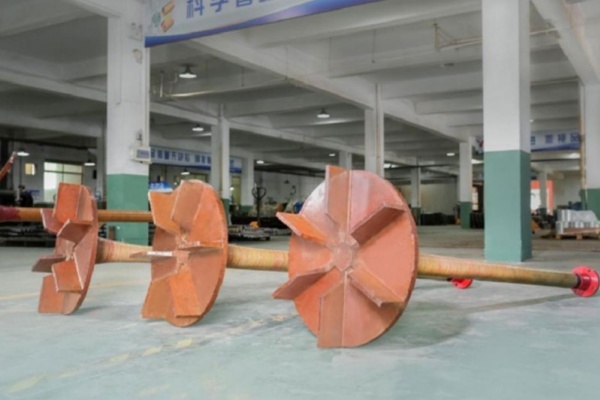
During leaching, valuable metals are transferred from solid materials into solution. This stage requires corrosion-resistant tanks, mixing equipment, pipelines, pumps, and control systems.
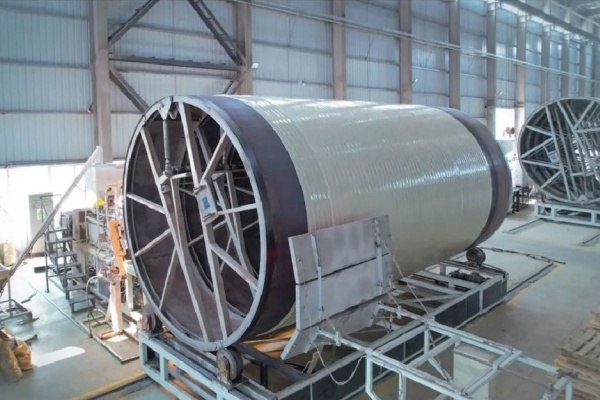
TYIC’s equipment portfolio includes storage tanks, reaction tanks, mixing tanks, steel-lined FRP tanks, steel-lined PPH tanks, steel-lined PVC tanks, stainless steel equipment, and related supporting systems.
3. Extraction and Metal Separation
After leaching, the solution contains multiple metal ions. The core technical challenge is to separate nickel, cobalt, manganese, and lithium efficiently while controlling impurities.
Solvent extraction is one of the key steps for selective separation and purification.
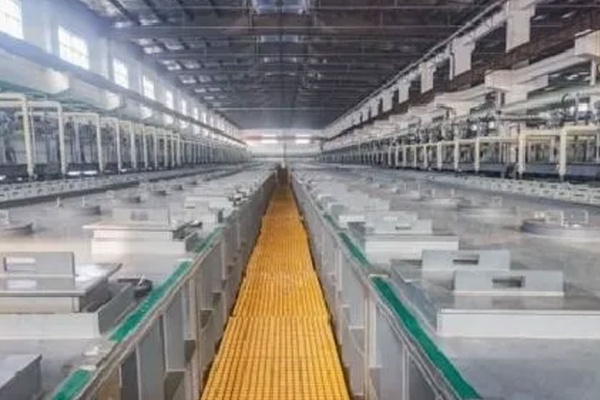
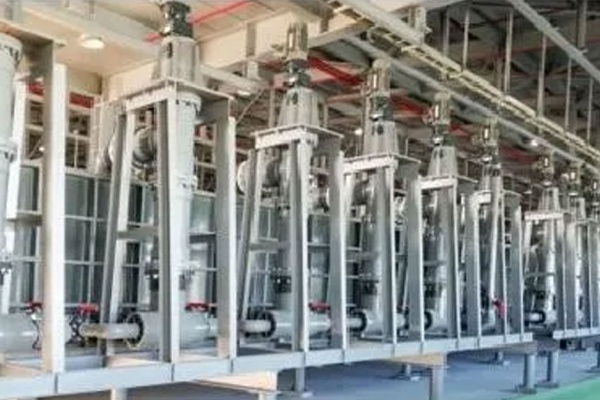
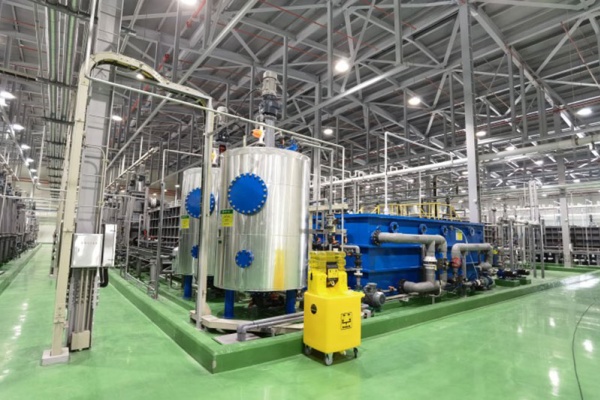
TYIC provides extraction equipment such as environment-friendly extraction boxes and tubular rapid extractors. These systems are designed for industrial separation processes where mixing efficiency, phase separation, residence time, equipment footprint, and operational stability are important.
Compared with traditional equipment arrangements, optimized extraction systems can support:
- Compact plant layout
- Stable continuous operation
- Reduced engineering investment
- Improved separation efficiency
- Lower maintenance difficulty
In a closed-loop recycling system, extraction cannot be treated as an isolated unit. It must be matched with upstream leaching quality and downstream crystallization or precipitation requirements.
A reliable extraction design considers solution concentration, impurity control, reagent circulation, phase ratio, flow balance, automation, and maintenance access.
4. Product Conversion and Resource Return
After separation and purification, target metals can be converted into usable intermediate products or battery-grade materials.
Depending on project requirements, the process may include:
- Evaporation and crystallization
- Electrolavagem
- Troca de iões
- Chemical precipitation
- Drying and packaging
For nickel-cobalt intermediate products such as MHP, the process may include washing, leaching, extraction, evaporation, crystallization, electrowinning, and ion exchange.
For rare and precious metal recovery, process designs may cover molybdenum, vanadium, lithium, rubidium, cesium, and other special extraction routes.
The value of a closed-loop system lies in the return of recovered metals to battery material production. Instead of relying only on primary mining resources, manufacturers can use recycled metals to support precursor and cathode material manufacturing.
This improves resource utilization and strengthens the resilience of the battery material supply chain.
5. Environmental Control
Battery recycling facilities must manage multiple environmental risks, including acid mist, organic waste gas, process wastewater, high-salt streams, and solid residues.
A closed-loop recycling plant should integrate environmental protection equipment directly into the production process.
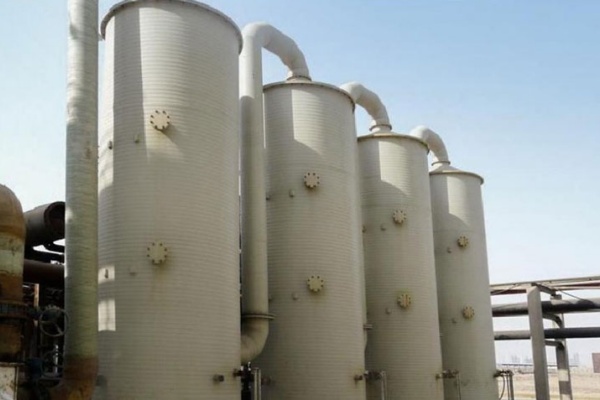
TYIC’s waste gas treatment process can include:
- Two-stage alkali washing
- One-stage water washing
- Remoção de névoa
- Adsorção com carvão ativado
- Temperature swing desorption
Alkali washing removes acidic components such as sulfuric acid mist and hydrogen chloride. Water washing reduces the impact of entrained alkali on downstream adsorption equipment.
Activated carbon adsorption treats organic waste gas, while temperature swing desorption helps restore adsorption performance.
For wastewater and process liquids, equipment material selection is also important. PPH, HDPE, PVC, FRP, and steel-lined materials can be selected according to temperature, concentration, corrosion conditions, and operating requirements.
Proper material selection reduces leakage risk, maintenance frequency, and long-term operating cost.
6. Engineering Design and Turnkey Delivery
A closed-loop recycling project requires more than single equipment supply. It needs a complete engineering package covering process design, equipment layout, pipeline routing, automation, installation, commissioning, and training.
TYIC provides turnkey package services for industrial projects. Its technical team covers process, machinery, equipment, and control systems.
The company can support:
- Material balance
- PFD and P&ID design
- Customized equipment structure design
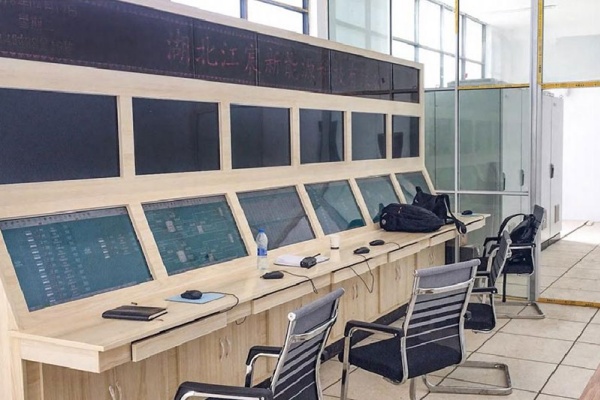
- Automation system design
- Pipeline and cable tray layout
- Tank filling and installation
- Production debugging
- Basic operator training
- Project management documentation
This integrated service model helps reduce coordination difficulty between process designers, equipment manufacturers, installation teams, and commissioning engineers.
For battery recycling projects, this is especially important because production stability, environmental compliance, and recovery efficiency must be considered together.
7. Operational Advantages
A well-designed closed-loop process can improve metal recovery, reduce resource loss, and support stable product quality.
It can also reduce production floor area through optimized layout and compact extraction systems. A smaller footprint may reduce civil engineering investment and improve plant utilization.
From an operating perspective, equipment with fewer wearing parts, low noise, stable performance, and reusable structure can improve long-term project economics.
Modular or movable equipment may also retain higher residual value when production lines are upgraded, relocated, or expanded.
Environmental advantages are also significant. Recyclable corrosion-resistant materials, controlled exhaust treatment, acid mist management, wastewater treatment, and efficient reagent circulation help reduce secondary pollution.
These factors support safer operation and better alignment with international quality and environmental standards.
8. TYIC’s Role in Battery Recycling Projects
TYIC has experience in industrial production design for battery-grade material recovery involving nickel, cobalt, manganese, and lithium.
The company has designed multiple production lines in domestic and overseas markets and has served projects in battery material recycling, non-ferrous metal processing, and environmental protection.
Its project references include cooperation with companies in the new energy and materials sectors, such as Tianneng, GEM, Ganfeng Lithium, Ningbo Lygend, and EcoPro.
TYIC also cooperates with research institutions and hydrometallurgy experts to support process development and engineering reliability.
For clients building or upgrading Li-ion battery recycling lines, the key requirement is not only equipment supply. The more important requirement is a complete closed-loop solution that connects pretreatment, metal recovery, purification, environmental control, automation, commissioning, and operator training.
A closed-loop recycling process supports stable metal recovery, cleaner operation, and reusable battery-grade resources for future production.
 Português
  English
  Deutsch
  Français
  Español
  Italiano