
Industrial enterprises often face unstable exhaust emissions, corrosive gases, and odor complaints; once uncontrolled, these issues trigger regulatory penalties, shutdown risks, and ESG pressure—yet engineered waste gas treatment systems offer a structured, compliant solution.
Waste gas treatment systems are integrated engineering solutions that collect, purify, and safely discharge industrial exhaust gases. Through tailored process design, material selection, and equipment integration, they help manufacturers meet emission standards, protect assets, and ensure sustainable, long-term operation across chemical, energy, and recycling industries.
Understanding how these systems work—and who can deliver them reliably—determines whether environmental compliance becomes a burden or a competitive advantage.
Table of Contents
1. Industrial Background & Emission Challenges
In modern industrial production, waste gas generation is unavoidable. Processes such as chemical synthesis, solvent extraction, metal refining, battery material production, and wastewater treatment continuously release acidic gases, VOCs, dust, and odorous compounds. These emissions are often characterized by high corrosion, variable concentrations, and complex compositions, making generic treatment solutions ineffective.
For export-oriented manufacturers and multinational clients, emission control is not only a local regulatory requirement but also a prerequisite for global supply chain access. Inconsistent exhaust management can result in failed audits, delayed production expansion, and damaged brand credibility. Therefore, waste gas treatment systems must be designed as process-level solutions, not standalone equipment.
2. TYIC’s Engineering-Oriented Treatment Philosophy
At Hangzhou Tianyicheng New Energy Technology Co., Ltd. (TYIC), waste gas treatment systems are developed under a full EPC (Engineering, Procurement, Construction) framework. This means the solution starts from emission analysis and ends with stable on-site operation.
Key engineering principles include:
-
Source-based analysis → identifying pollutant types, flow rates, and fluctuation patterns
-
Process matching → selecting optimal treatment routes instead of over-designed systems
-
Material optimization → using PP, PPH, HDPE, FRP, or composite materials to resist corrosion
-
Lifecycle thinking → balancing efficiency, maintenance, and operating cost
This approach ensures that each system is customized to the client’s production logic, not forced into a fixed template.
3. Core Waste Gas Treatment Processes Applied by TYIC
TYIC integrates multiple proven treatment processes, often in combination, to achieve stable compliance under real industrial conditions.
• Absorption & Scrubbing Systems
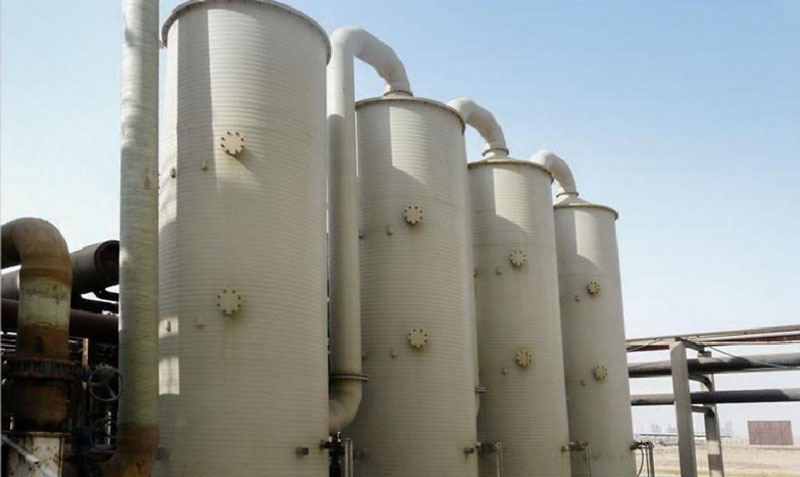
Wet scrubbers, spray towers, and packed towers are widely applied for acidic and alkaline gases such as HCl, SO₂, HF, and NH₃. By precisely controlling liquid–gas contact efficiency and reagent dosage, TYIC systems achieve high removal rates while minimizing secondary wastewater load.
• Adsorption Systems
Activated carbon adsorption units are applied for VOCs and odorous compounds under low to medium concentrations. TYIC designs these systems with modular structures, allowing easy replacement, regeneration planning, and future capacity expansion.
• Thermal & Catalytic Oxidation
For high-concentration organic exhaust, thermal oxidizers or catalytic oxidation systems convert pollutants into CO₂ and H₂O. TYIC emphasizes heat recovery integration to reduce energy consumption and improve overall system efficiency.
• Biological Treatment Processes
Biofilters and biotrickling systems are used for large air volumes with low pollutant concentrations, particularly in environmental protection and wastewater-related facilities. These systems offer low operating cost and strong sustainability performance.
4. System Integration & Equipment Manufacturing
Unlike suppliers that focus only on individual devices, TYIC emphasizes system integration. Ducting design, pressure balance, fan selection, and automation control are engineered as a unified whole. This prevents common problems such as:
-
Uneven gas distribution
-
Excessive pressure drop
-
Corrosion-related leakage
-
Unstable emission results
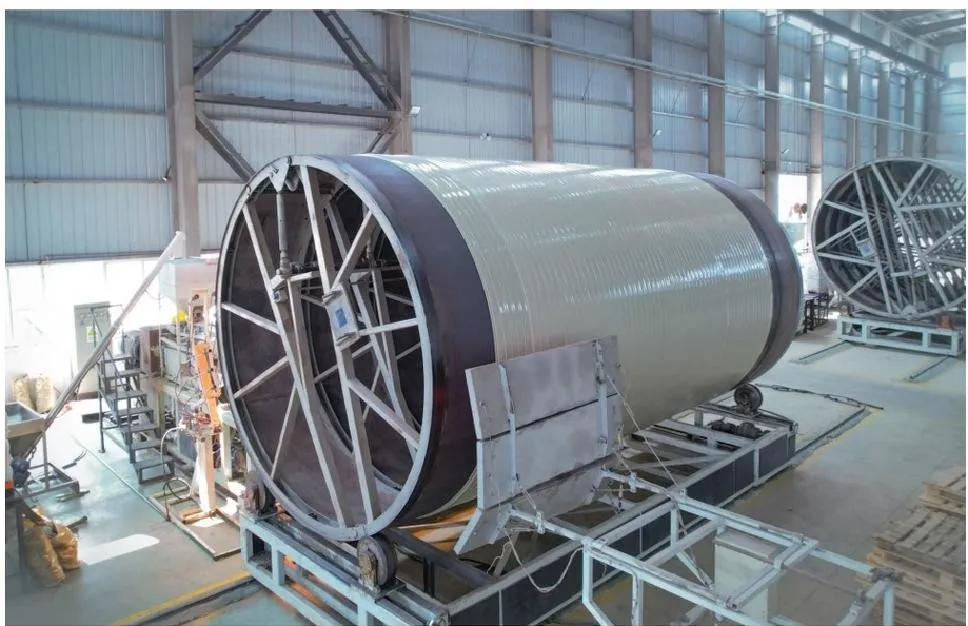
All core equipment—including scrubbers, tanks, pipelines, and auxiliary units—is manufactured in-house, ensuring quality control and delivery reliability.
5. Compliance, ESG, and Long-Term Value
Waste gas treatment systems are no longer passive compliance tools; they are active contributors to ESG performance and sustainable manufacturing. TYIC systems help clients:
-
✔ Meet local and international emission standards
-
✔ Improve workplace safety and odor control
-
✔ Reduce corrosion-related maintenance costs
-
✔ Support long-term production stability
For industries such as lithium battery recycling, non-ferrous metal processing, and chemical manufacturing, these benefits translate directly into lower operational risk and stronger global competitiveness.
By combining engineering depth, corrosion-resistant materials, and EPC execution capability, TYIC delivers waste gas treatment systems that perform reliably beyond commissioning—throughout the entire plant lifecycle.
Summary
TYIC waste gas treatment systems integrate engineering, materials, and process control to deliver compliant, durable, and sustainable industrial emission solutions.
 English
  Deutsch
  Français
  Português
  Español
  Italiano